Do You Need Golf Shoes To Play Golf: What To Know
Introduction
No, you do not usually need golf shoes to play golf in the United States. Most beginners can play a casual round in clean athletic shoes or sneakers if the course allows them. Golf shoes become more useful when you need better grip, play on wet grass, walk long distances, or compete under strict course rules.
Before you arrive, check the dress code of the U.S. golf course or call the pro shop. Some private clubs require golf shoes, while many public courses accept regular athletic shoes. The key is to wear shoes with good traction, a stable sole, and no design that could harm the putting green.

What Do Golf Shoes Do?
Golf shoes help your feet stay stable during the swing. They also add support and traction while you walk across grass, slopes, sand, and wet ground.
A golf swing creates force between your feet and the ground. If your shoes slide, your body may lose balance. That can affect contact, swing speed, and direction. Good golf shoes help you keep a steady base without digging into or harming the turf.
Golf shoes often include:
- Tread or traction elements for grip on grass
- A firm midsole to support the foot during the swing
- A stable heel to reduce unwanted movement
- Water-resistant or waterproof materials for damp conditions
- A flexible design for walking 18 holes
Golf shoes are not magic equipment. They will not fix poor balance or a weak swing. Their main role is simple: they help your feet stay planted while protecting the course.
Spiked and spikeless golf shoes
Modern golf shoes usually fall into two groups:
| Type | How it grips | Main benefit | Main limitation |
|---|---|---|---|
| Spikeless | Rubber lugs built into the sole | Comfortable and versatile | May offer less grip in very wet conditions |
| Soft-spike | Replaceable plastic cleats | Strong traction and stability | Less useful away from the course |
| Metal spike | Traditional metal spikes | Very strong grip | Often banned because they can damage greens |
Most American golf courses that allow spikes permit soft spikes, not metal spikes. Many golfers now choose spikeless shoes because they can wear them in the clubhouse, on the driving range, and during casual rounds.
Can You Play Golf in Sneakers?
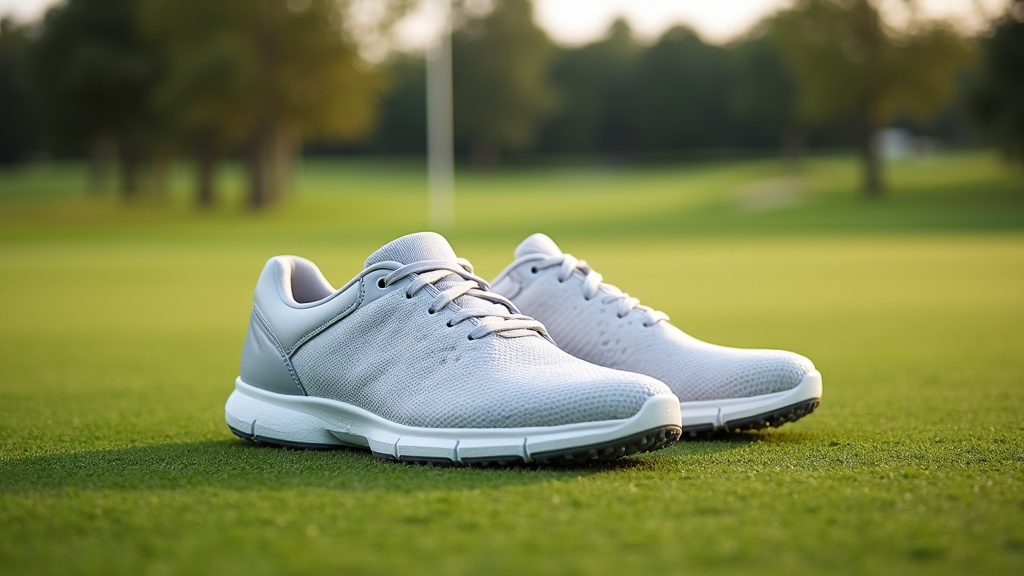
Yes, you can often play golf in sneakers, especially for a first lesson, a casual nine-hole round, or a visit to a public course. Running shoes, walking shoes, and court shoes may work if they have a clean sole and enough grip.
Sneakers are a reasonable choice when:
- The course dress code allows them
- The grass is dry
- You are new to golf
- You are playing a short or casual round
- You do not want to buy golf shoes yet
- Your shoes have a stable sole
Running shoes are less ideal than cross-training or court shoes. Many running shoes have soft, curved soles designed for forward motion. Golf requires balance during rotation, so a flat and stable sole often works better.
Avoid shoes with:
- Smooth soles
- High heels
- Loose or worn-out tread
- Open sections that let in water
- Deep cleats meant for baseball or soccer
- Mud or grass stuck to the bottom
Do not wear dirty shoes onto the putting green. Soil, mud, and loose grass can affect the green and create a poor impression at the course.
When sneakers may not work well
Sneakers may become a problem on steep, wet, or soft ground. Your feet can slip during the swing, and your shoes may become soaked before the round is over.
They can also feel less stable during long rounds. An 18-hole round may involve several miles of walking. Golf shoes often provide better support for repeated walking on uneven turf.

When Do You Need Golf Shoes?
You need golf shoes when the course requires them. You may also need them when regular shoes cannot provide enough grip or comfort for the conditions.
Course dress codes
Golf courses set their own clothing and footwear policies. Public courses often have simpler rules than private clubs, but policies vary by location.
A course may require:
- Golf shoes or approved athletic shoes
- Soft spikes or spikeless soles
- No metal spikes
- No shoes that damage greens
- Clean shoes in the clubhouse
- A certain standard of dress for tournaments
The safest step is to check the course website or call the pro shop before you play. Do not assume that a policy at one course applies to another.
Wet or slippery conditions
Golf shoes offer a clear benefit when grass is wet from rain, dew, or irrigation. Traction matters most during:
- Early morning tee times
- Rainy rounds
- Hilly courses
- Damp fairways
- Soft ground
- Cold weather, when turf may feel slick
Even then, spikeless shoes may be enough for many players. Soft-spike shoes can provide more grip when conditions are unusually wet.
Competitive play
A tournament may have stricter dress and footwear rules. The event committee, host club, or league may require golf shoes or ban certain types of footwear.
Read the event instructions before you arrive. If the rules are unclear, ask the tournament director or golf shop. Arriving in nonapproved shoes could keep you from playing.

Are Golf Shoes Worth It for Beginners?
Golf shoes can be worth the cost for beginners who plan to play often. They are less necessary for someone trying golf for the first time.
A beginner may benefit from golf shoes if they:
- Play at least a few times each month
- Walk most rounds
- Play in wet or hilly areas
- Take regular lessons
- Want consistent traction while learning
- Play at clubs with footwear rules
You probably do not need golf shoes immediately if you are only hitting balls at a driving range or joining one casual beginner round. Start with clean, stable athletic shoes and upgrade when you know you enjoy the sport.
A simple cost decision
Consider this example:
- One casual round: athletic shoes may be enough
- Several rounds each month: golf shoes may improve comfort
- Weekly play: golf shoes are usually a practical investment
- Tournament or private-club play: course rules may make them necessary
The best choice depends less on skill level and more on how often you play, where you play, and how much you walk.

Spikeless vs. Spiked Golf Shoes
Spikeless golf shoes are the best starting point for many golfers because they offer a balance of grip, comfort, and daily use. Soft-spike shoes make more sense when you often play in wet conditions or need stronger traction.
Choose spikeless shoes when:
- You play mostly on dry courses
- You want to wear the shoes before and after a round
- You walk often
- You play casual golf
- You prefer a lighter shoe
- You want easy maintenance
Choose soft-spike shoes when:
- Your course is wet or hilly
- You swing aggressively and need more grip
- You play early in the morning
- You want replaceable traction pieces
- Your club recommends or requires soft spikes
Avoid metal spikes unless the course clearly permits them
Metal spikes can damage greens and clubhouse floors. Many courses in the United States do not allow them. A course may also reject shoes with large, aggressive cleats even if they are not metal.
If you are unsure, use spikeless shoes or ask the course before your round.

How Should Golf Shoes Fit?
Golf shoes should fit firmly without squeezing your toes. Your heel should stay in place as you walk, and your toes should have enough room to move.
Use these checks:
- Try shoes on while wearing the socks you normally golf in.
- Stand up and check for pressure around the toes.
- Walk on a hard surface and turn from side to side.
- Make sure your heel does not lift excessively.
- Leave a small amount of space in front of your longest toe.
- Try both shoes because feet may differ slightly in size.
A poor fit can cause blisters, sore feet, or numb toes. It may also change how you stand over the ball.
If you walk 18 holes, comfort matters as much as traction. Waterproof shoes may keep your feet dry, but they can feel warmer and less flexible. Breathable shoes may feel better in summer but offer less protection in rain.

What Should You Wear If You Do Not Have Golf Shoes?
Wear clean athletic shoes with a stable sole and good tread. Court shoes, cross-training shoes, and some walking shoes can work well.
Before leaving for the course, check the following:
- The shoes are clean
- The sole is not smooth
- The tread is not worn down
- The shoes do not have metal cleats
- The shoes provide enough support
- The course permits athletic shoes
Bring a second pair of shoes if rain is possible. Wet sneakers may take a long time to dry and can become uncomfortable during the walk home.
Do not wear sandals, dress shoes, boots with a hard heel, or shoes with deep outdoor cleats unless the course specifically allows them. These options may reduce balance, damage turf, or conflict with the dress code.

Common Mistakes to Avoid
The most common mistake is assuming that every golf course has the same footwear rules. Policies can differ between a municipal course, a daily-fee course, a country club, and a tournament venue.
Other mistakes include:
- Playing in smooth-soled shoes
- Wearing dirty shoes on the putting green
- Using metal spikes without checking
- Buying shoes that are too tight
- Choosing style over walking comfort
- Wearing running shoes with little side support
- Waiting until the first tee to learn the dress code
- Using soccer or baseball cleats on a golf course
Course care also matters. Repair ball marks, rake bunkers, and avoid dragging your feet across the putting surface. Proper shoes should help you play without harming the turf.
If your feet slip during the swing, first check the grass and your stance. A new pair of shoes will not replace good balance, sound setup, or safe footing.

Quick Decision Guide
Use this guide to choose footwear for your next round:
| Situation | Best practical choice |
|---|---|
| First time trying golf | Clean athletic shoes |
| Driving range session | Athletic shoes or golf shoes |
| Dry public course | Sneakers or spikeless golf shoes |
| Wet morning round | Spikeless or soft-spike golf shoes |
| Hilly course | Golf shoes with strong traction |
| Private club | Check the club’s dress code |
| Tournament | Follow the event’s footwear rules |
| Walking 18 holes | Comfortable golf shoes |
| Metal-spike course policy unclear | Do not wear metal spikes |
The short answer is that golf shoes are helpful but not always required. Course rules and ground conditions should decide the final choice.

Frequently Asked Questions
Can I wear running shoes to play golf?
Usually, yes, if the course allows athletic shoes. Running shoes may feel less stable during the golf swing because they often have soft, curved soles. Cross-training or court shoes may provide better support.
Can I play golf barefoot?
No. Golf courses generally require proper footwear for safety, comfort, and turf protection. Bare feet can be injured by rocks, sticks, sharp grass, hot surfaces, or insects.
Do golf shoes improve your swing?
Golf shoes can improve traction and stability, but they do not automatically improve swing technique. They may help you keep your footing when the ground is wet or when your swing creates more rotational force.
Are spikeless golf shoes better than soft spikes?
Neither type is best for every golfer. Spikeless shoes are versatile and comfortable. Soft spikes may provide more traction in wet or hilly conditions. Your course, climate, and walking habits should guide the choice.
Can I wear golf shoes off the course?
Many spikeless golf shoes can be worn in casual settings. Soft-spike shoes are less convenient because their cleats may feel uncomfortable on hard floors. Check the shoe design and avoid wearing dirty golf shoes indoors.
Do golf shoes have to be waterproof?
No. Waterproof shoes are useful in rain, dew, and wet grass, but they are not required for golf. Breathable, nonwaterproof shoes may feel cooler and more comfortable during dry summer rounds.
Conclusion
You do not need golf shoes to play most casual rounds in the United States. Clean sneakers or stable athletic shoes are often acceptable for beginners and dry conditions.
Golf shoes become more useful when you play often, walk 18 holes, face wet or steep terrain, or play at a club with a footwear rule. Start by checking the course policy, then choose shoes that offer stable support, suitable traction, and enough comfort for the full round.
Your next step is simple: check the course website or call the pro shop. If athletic shoes are allowed, wear a clean pair with a firm, textured sole.