Spiked Vs Spikeless Golf Shoes: Which Is Best?
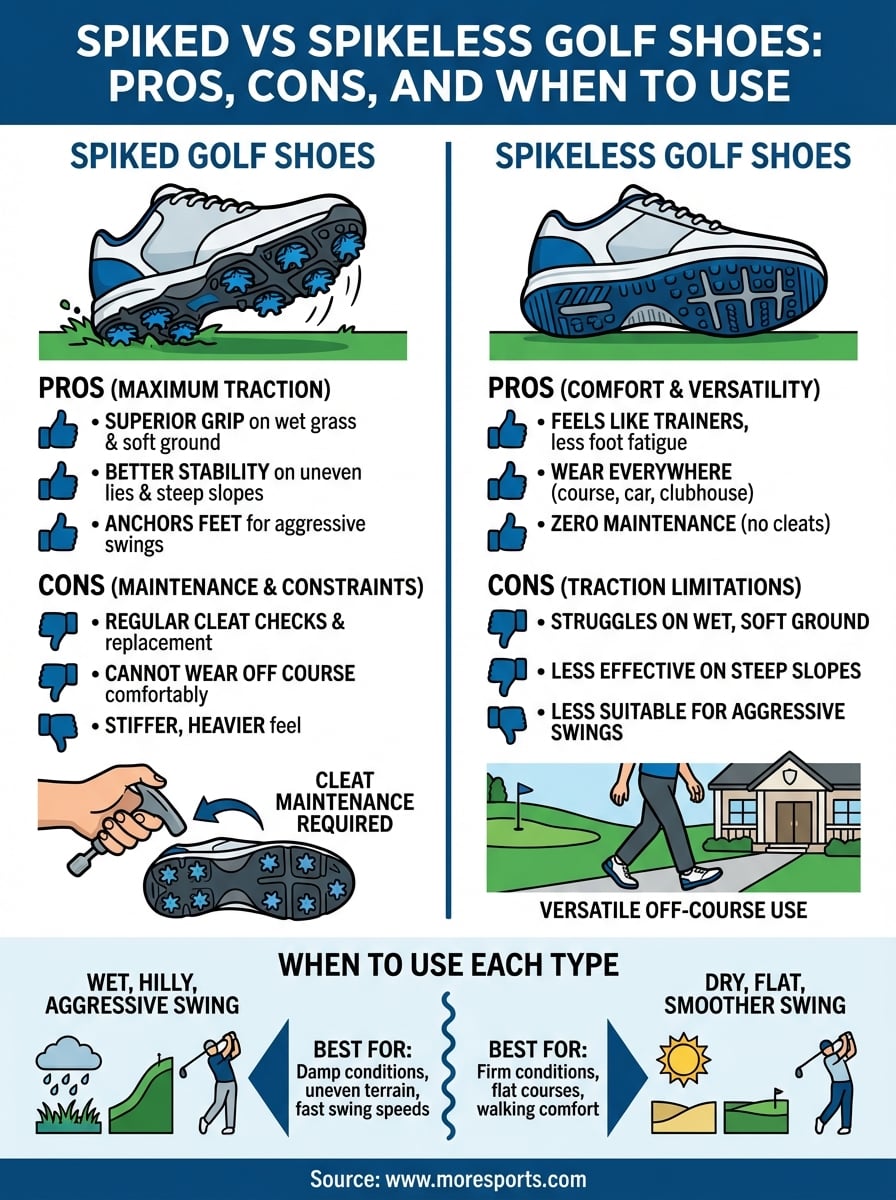
For golfers in the United States, spiked golf shoes offer the strongest grip, while spikeless golf shoes offer more comfort and flexibility away from the course. Neither design is best for every player. Your choice depends on course conditions, swing speed, walking habits, weather, and whether you want one pair for golf and daily wear.
A useful rule is simple:
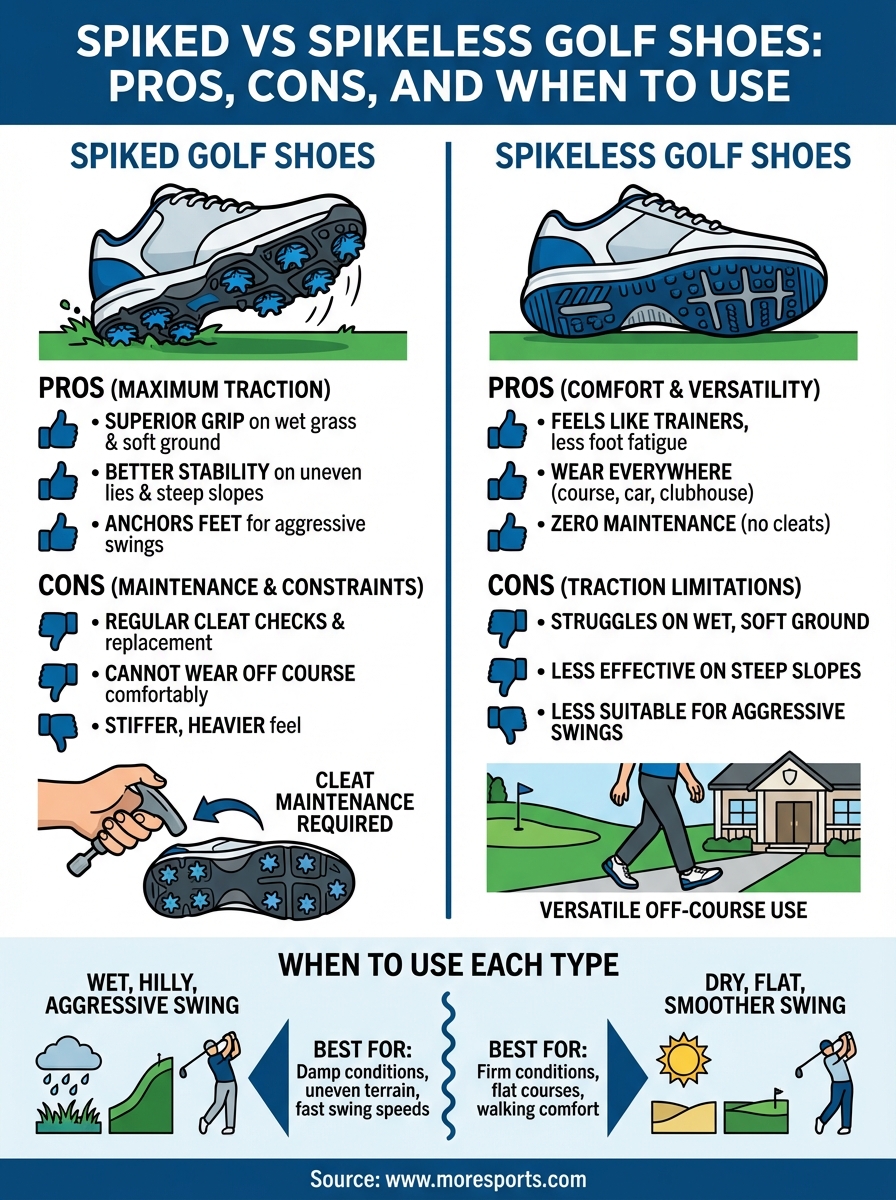
- Choose spiked shoes for wet courses, hilly terrain, strong swings, or maximum foot stability.
- Choose spikeless shoes for dry conditions, casual rounds, walking comfort, and easy wear from the parking lot to the clubhouse.
Both types can work well. The right pair should fit your foot, keep your heel secure, resist water when needed, and provide enough traction for your normal courses.
What Is the Difference Between Spiked and Spikeless Golf Shoes?
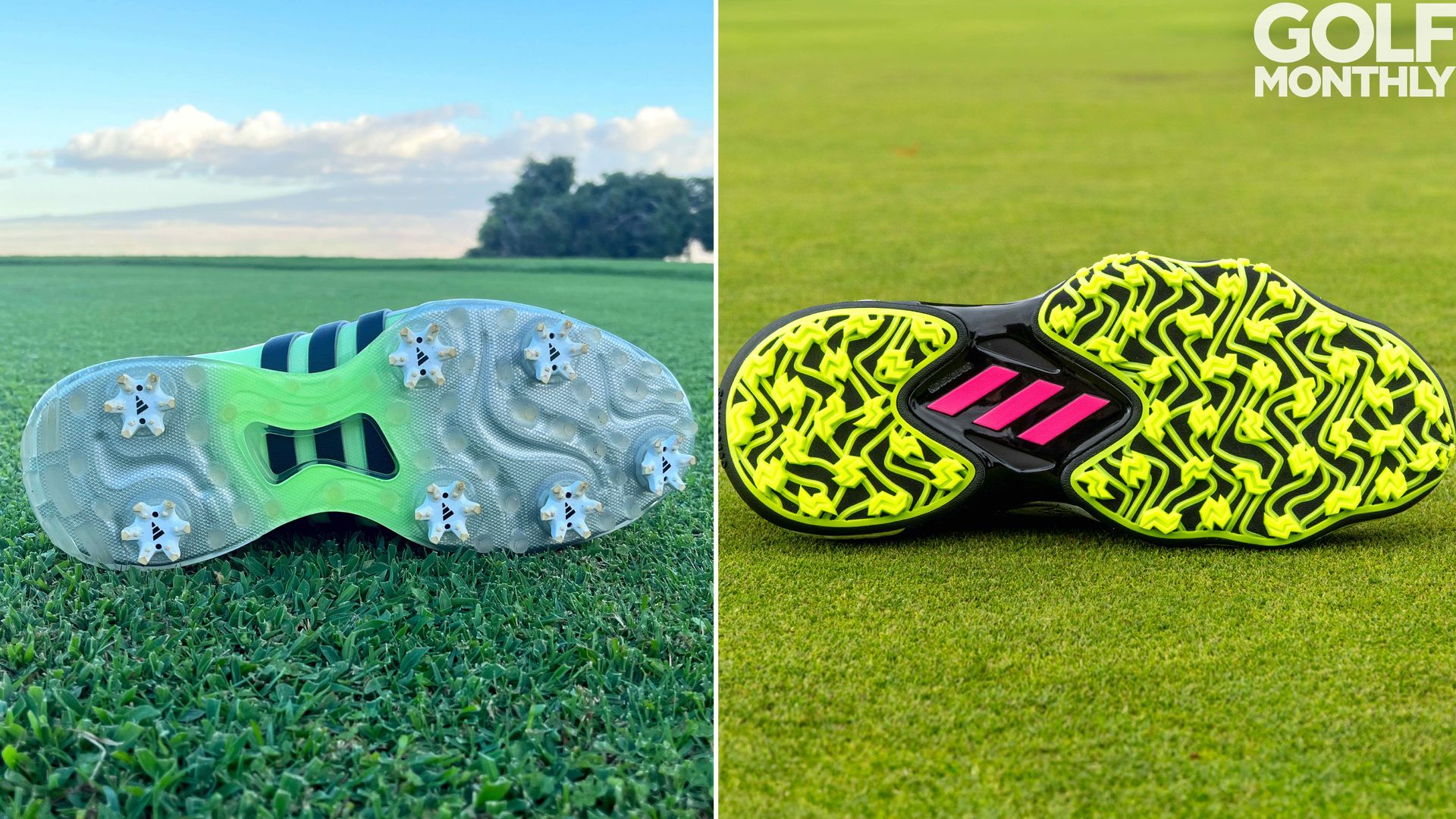
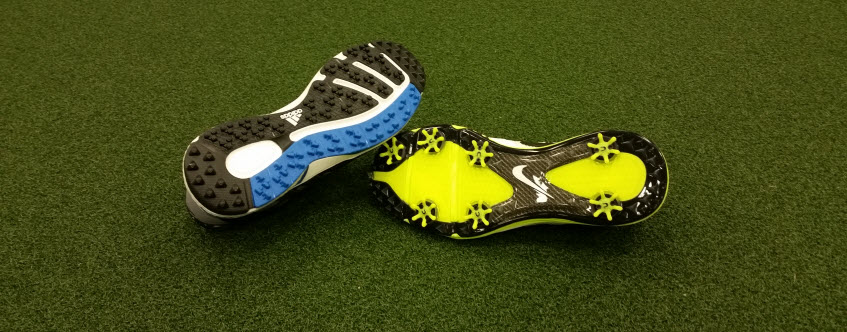
Spiked golf shoes use replaceable or fixed traction cleats on the outsole. Spikeless shoes use molded rubber lugs, dimples, or ridges instead of separate cleats.
The main difference is how each shoe grips the ground:
- Spiked shoes: Grip the turf with raised cleats that press into the ground.
- Spikeless shoes: Grip the turf with a broad rubber outsole and many small traction points.
- Traditional metal spikes: Less common in everyday golf because many courses restrict them due to green damage.
- Soft spikes: The most common cleated design in the United States. They usually use plastic or rubber cleats that can be replaced.
Spikeless does not mean traction-free. A quality spikeless shoe may grip well on firm, dry turf. However, its traction can decline sooner on wet grass, steep slopes, loose soil, or worn surfaces.
Spiked golf shoes
Spiked shoes place traction elements under key parts of the foot. These areas often include the heel, outside edge, and forefoot.
The cleats help limit foot movement during the golf swing. This can matter most during the downswing, when the player pushes into the ground and rotates the body.
Most modern spiked shoes use soft spikes rather than metal spikes. Soft spikes are quieter, gentler on most greens, and easier for courses to accept.
Spikeless golf shoes
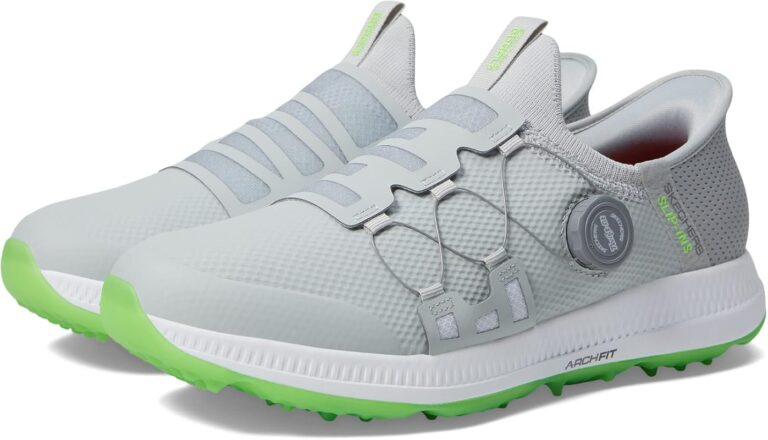
Spikeless shoes use rubber patterns built into the outsole. Some look like athletic shoes, while others have a more traditional golf-shoe shape.
The traction pattern can vary greatly. A shoe with deep, widely spaced lugs may handle damp grass better than a flat shoe with small dots. The word “spikeless” alone does not tell you how much grip a shoe provides.
Spiked vs. Spikeless Golf Shoes: Key Differences
The best choice depends on the conditions that matter most to you. The table below compares the two designs by common buying factors.
| Feature | Spiked golf shoes | Spikeless golf shoes |
|---|---|---|
| Maximum turf grip | Usually higher, especially in wet or soft conditions | Good in dry and mildly damp conditions |
| Walking comfort | Can feel firm underfoot | Often feels more like a walking or running shoe |
| Off-course use | Limited by cleats and outsole shape | Often suitable for travel and casual wear |
| Stability during the swing | Strong, especially on slopes | Good, but depends heavily on outsole design |
| Course versatility | Best for serious golf use | Easy to use on many surfaces |
| Green friendliness | Soft spikes are generally accepted; check local rules | Usually gentle on greens |
| Maintenance | Cleats may need cleaning or replacement | Outsole is simple to maintain |
| Weight | May be slightly heavier, but not always | Often lighter, but not always |
| Wet-weather performance | Usually the safer choice | Depends on lug depth and rubber compound |
| Long-term cost | May require replacement cleats | No cleat replacement, but outsole wear ends shoe life |
These are general patterns, not guarantees. A well-made spikeless shoe may outperform a poorly designed spiked shoe in some conditions.
Traction and Stability: Which Shoe Has Better Grip?
Spiked golf shoes usually provide better maximum traction. Their cleats can press into turf and reduce sliding when the ground is wet or the player makes a powerful swing.
This does not mean every golfer needs spikes. Many recreational players swing at moderate speed and play mostly on firm, dry courses. For them, a well-designed spikeless shoe may provide enough grip.
Traction depends on several factors:
- Outsole pattern
- Rubber compound
- Cleat shape and placement
- Turf moisture
- Slope and soil condition
- Player weight and swing force
- Footwork and swing mechanics
- Shoe fit
A loose shoe can feel unstable even if it has excellent traction. Your heel should stay in place, and your foot should not slide inside the upper during the swing.
When spikes have an advantage
Spiked shoes are often the better option when you:
- Play early in the morning when grass is wet
- Golf in rainy or humid conditions
- Play on hilly courses
- Use a forceful swing
- Notice your back foot slipping during the downswing
- Play during spring or fall when turf can stay soft
- Need a secure stance for uneven lies
Spikes can also help golfers who have limited balance. They do not fix balance problems, but extra grip may make a stable stance easier.
When spikeless traction is enough
Spikeless shoes may be enough when you:
- Play mostly in dry weather
- Walk on flat or gently rolling courses
- Prefer a natural walking feel
- Play casual rounds
- Want to wear the shoes while traveling
- Do not experience foot movement during the swing
- Change courses often and want one flexible pair
Look for rubber lugs with clear edges. A nearly flat outsole may feel comfortable but can lose grip on damp turf.
Comfort and Walking: Are Spikeless Shoes Better?
Spikeless golf shoes often feel more comfortable for walking, especially when they use a flexible sole and cushioned midsole. They can feel closer to a regular athletic shoe.
That advantage is not universal. Some spiked shoes also have soft cushioning, wide toe boxes, and flexible construction. The cleats may be noticeable on hard surfaces, but the overall shoe can still be comfortable for 18 holes.
Fit matters more than the label. A spikeless shoe that pinches your toes is not more comfortable than a well-fitted spiked shoe.
What to check before buying
Try the shoes with the socks you normally wear for golf. Then check these areas:
- Toe room: Your toes should not touch the front when you walk downhill.
- Heel hold: Your heel should remain secure without painful pressure.
- Midfoot fit: The shoe should hold your foot without forcing the arch.
- Width: Your forefoot needs room to spread during the swing.
- Flex point: The shoe should bend near the ball of your foot.
- Weight: A heavy shoe can increase fatigue over a long walking round.
- Water protection: Choose the right level for your local weather.
Walk on a hard floor in the store if allowed. This can reveal whether the outsole feels too stiff or noisy.

Waterproofing and Wet-Weather Performance
Spiked shoes usually have an advantage in wet conditions because their cleats can maintain separation from damp turf. However, waterproofing and traction are separate features.
A waterproof shoe can keep your socks dry but still slip if its outsole lacks grip. A highly aggressive outsole can grip wet grass but allow water through the upper.
Look for the shoe’s stated water protection:
- Water-resistant: Helps with light moisture but may not stop prolonged rain.
- Waterproof membrane: Uses a layer designed to block water, though breathability may vary.
- Waterproof construction or warranty: May include specific test conditions and time limits. Read the maker’s terms.
- Mesh upper: Often lighter and more breathable, but it may need added treatment or a membrane for wet play.
Waterproof shoes can feel warmer. If you play in hot, dry parts of the United States, a breathable spikeless shoe may be more comfortable than a heavily sealed model.
For frequent rain, dew, or wet fairways, choose a shoe with both a reliable waterproof design and a traction pattern suited to soft turf.
Swing Stability and Weight Transfer
A golf shoe helps create a stable connection between your feet and the ground. It cannot replace sound technique, but the outsole can affect how confidently you push, rotate, and stop.
During a swing, the feet experience forces in several directions:
- Forward and backward
- Side to side
- Rotational forces
- Pressure changes between the heel and forefoot
Spikes can resist these forces more aggressively, especially when the ground is soft. Spikeless shoes spread pressure across a wider area, which can feel smoother and more natural.
The right choice depends on your movement pattern. If you regularly slide or twist inside your shoes, try a spiked model or a spikeless shoe with deeper perimeter lugs. If your shoes feel stiff and restrict your walk, try a more flexible outsole.
Do not use footwear to force a swing change. If you have pain, repeated slipping, or balance problems, a qualified golf professional or health professional may help identify the cause.

Durability, Maintenance, and Replacement Costs
Spiked shoes can offer a practical maintenance advantage because worn cleats may be replaced. The rest of the shoe still wears out, but new cleats can restore some traction.
Spikeless shoes have fewer removable parts. They are simple to clean, but once the rubber outsole wears smooth, the shoe usually cannot be restored to its original grip.
Caring for spiked shoes
- Remove grass and mud after each round.
- Check cleats for missing or damaged pieces.
- Replace worn cleats with the correct compatible type.
- Tighten cleats according to the manufacturer’s instructions.
- Keep the shoes dry at room temperature.
- Do not place wet shoes against a heater or use high heat.
Caring for spikeless shoes
- Brush away dirt before it dries.
- Clean the outsole grooves with a soft brush.
- Follow the maker’s instructions for leather, synthetic, or knit uppers.
- Avoid soaking shoes unless the manufacturer permits it.
- Air-dry them fully before storing.
- Inspect the outsole for smooth areas and cracking.
A common mistake is wearing golf shoes as everyday shoes for long distances. Walking on asphalt can wear down the outsole faster, especially on spiked models.
Can You Wear Spiked or Spikeless Shoes Off the Golf Course?
Spikeless golf shoes are usually better for off-course use. Their outsoles can feel more natural on sidewalks, store floors, and pavement.
Spiked shoes are less practical away from the course. Even soft spikes can feel awkward on hard surfaces. Walking on concrete may also increase wear on the cleats.
If you travel often, spikeless shoes can reduce the need to pack a second pair. Still, clean them before entering a home, hotel, or business. Turf can carry mud, fertilizer, and plant matter.
Do not assume that every spikeless shoe is safe for every indoor floor. Wet rubber can slide on polished surfaces, and deep lugs can trap dirt.

Course Rules in the United States
Most U.S. golf facilities allow modern soft-spike and spikeless shoes, but policies vary by course and event.
The USGA Rules of Golf address footwear and allow committees to adopt local restrictions. A course may limit certain spikes or footwear if the design could damage putting greens or create other problems.
Before a tournament or a visit to a private club:
- Check the course website.
- Ask the golf shop about current footwear rules.
- Review the event’s local rules.
- Confirm whether metal spikes are allowed.
- Ask about indoor clubhouse requirements.
Do not rely only on an old dress-code page or advice from another golfer. Policies can differ between nearby courses.
Which Golf Shoes Should You Choose?
Use your normal playing conditions rather than brand claims to decide.
Choose spiked golf shoes if:
- You play in wet or soft conditions.
- You play steep or uneven courses.
- You want maximum grip during the swing.
- You have experienced slipping in spikeless shoes.
- You do not need to wear the shoes away from the course.
- You are willing to replace cleats when they wear.
Choose spikeless golf shoes if:
- You value walking comfort.
- You play mainly on dry, firm courses.
- You want one pair for golf and travel.
- You prefer a lighter, more flexible feel.
- You rarely play on steep or wet terrain.
- You want a simple outsole with no replaceable parts.
A simple decision score
You can use this practical guide:
- Wet courses or frequent rain: Spiked
- Dry, firm courses: Either
- Hilly terrain: Spiked or highly aggressive spikeless
- Maximum walking comfort: Often spikeless
- One pair for travel: Spikeless
- Strong foot rotation or slipping: Spiked
- Metal-spike restrictions: Soft-spiked or spikeless
- Daily pavement use: Spikeless, but expect faster wear
If your needs are mixed, buy based on your biggest problem. For example, a golfer who walks comfortably but slips in morning dew should prioritize traction. A golfer who has stable footing but foot pain should prioritize fit and cushioning.
Common Mistakes to Avoid
Choosing by appearance alone
A shoe can look like a running shoe and still have poor golf traction. Inspect the outsole, not just the upper.
Assuming all spikes are the same
Soft spikes vary in shape, size, and placement. Some focus on rotational grip, while others provide broader contact.
Ignoring course conditions
The best shoe for a dry Arizona course may not suit a wet Pacific Northwest morning. Match the outsole to the turf you actually play.
Buying the wrong size
Golf shoes should fit securely but should not squeeze the toes. A poor fit can cause blisters, movement, and an unstable stance.
Wearing wet shoes without drying them
Damp shoes can develop odor and material damage. Remove insoles if the manufacturer allows it, and let the shoes dry naturally.
Using worn cleats
Replace cleats when they are rounded, cracked, missing, or no longer provide a firm connection with the ground.
Expecting shoes to solve swing faults
Shoes can improve traction, but they cannot correct poor balance, an improper swing path, or a fitting problem. If slipping continues, inspect both your footwear and your technique.
Frequently Asked Questions
Are spiked golf shoes better than spikeless shoes?
Spiked shoes are better for maximum grip, wet turf, slopes, and forceful swings. Spikeless shoes are often better for comfort, travel, and dry conditions. The better choice depends on your courses and priorities.
Do spikeless golf shoes have enough traction?
Many do. Rubber lugs can provide strong grip on dry and moderately damp turf. Spikeless shoes may be less secure than spikes on very wet, soft, or steep ground, especially when the tread is shallow or worn.
Are soft spikes allowed on U.S. golf courses?
Soft spikes are widely accepted, but each course or event can set its own policy. Check the facility’s current rules before playing. The USGA Rules of Golf also allow committees to regulate footwear through local rules.
Can spikeless golf shoes damage greens?
Properly designed spikeless golf shoes are generally made for use on greens. However, any footwear can cause damage if a player drags their feet or twists aggressively. Follow course etiquette and local rules.
How long do golf shoes last?
Service life depends on use, walking distance, surface, care, and construction. Replace shoes when the outsole loses traction, the upper leaks, the midsole collapses, or the shoe no longer holds your foot securely. There is no reliable single mileage figure for every golfer.
Can I replace the spikes in golf shoes?
Many soft-spike models use replaceable cleats. Confirm the cleat system and replacement part with the manufacturer. Some spiked shoes have fixed traction elements and cannot accept new cleats.
Key Takeaways
- Spiked golf shoes usually offer the strongest grip, especially on wet, soft, or sloped turf.
- Spikeless golf shoes often provide better walking comfort and are easier to use away from the course.
- Spikeless does not mean traction-free; outsole design matters.
- Fit, heel security, water protection, and course conditions matter more than appearance.
- Soft-spike and spikeless policies are common in the United States, but course rules can vary.
- Replace worn cleats or shoes before traction becomes a safety problem.
Final Recommendation
Choose spiked golf shoes if traction and swing stability are your top concerns, particularly in wet conditions or on hilly courses. Choose spikeless golf shoes if you want comfort, flexibility, and a pair that works well for travel and casual wear.
When the choice is close, try both styles on grass if possible. Walk, set up to a golf shot, and make a slow practice swing. The best golf shoe is the one that keeps your foot secure without creating pressure, slipping, or fatigue.
For current rules, consult the USGA Rules of Golf and confirm footwear requirements directly with the U.S. course you plan to play.