
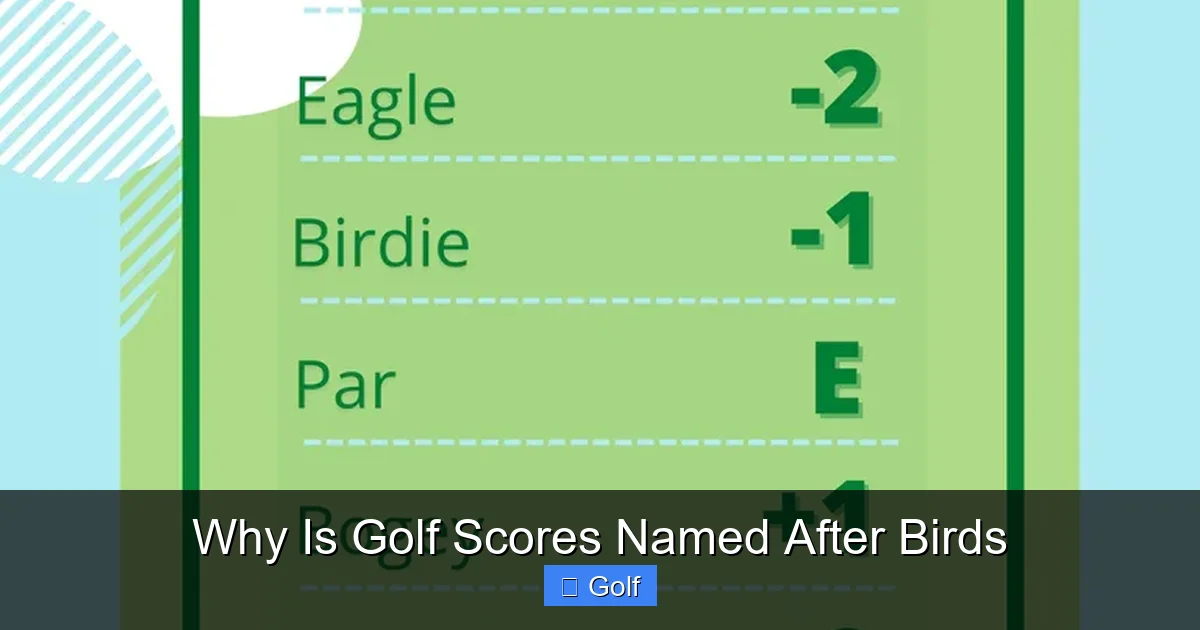
Why Is Golf Scores Named After Birds? The Timeless Charm of Golf Scores
Golf terminology is steeped in early 20th-century American slang, where “bird” was used as a descriptor for anything excellent or remarkable. Over time, this evolved into the specific scoring language we use today, cementing birds as the permanent mascots of a great golf performance.
If you have ever spent a day on the links, you have likely heard the familiar cheers when someone hits a “birdie” or the rare, hushed excitement following an “eagle.” For new players, the link between the sport of golf and the animal kingdom can seem a bit strange. Why are we talking about flocks of birds when we are simply trying to get a small white ball into a hole?
As we head into 2026, golf remains a game defined as much by its unique language as its physical demands. Understanding why golf scores are named after birds is not just about history; it is about appreciating the culture and the colorful personality of the game itself. Let’s take a flight through the origins and the evolution of these famous terms.
Key Takeaways
- The Slang Origin: The term “birdie” originated from early 20th-century American slang, where “bird” meant something cool or outstanding.
- Birdie Evolution: A “birdie” became the standard for finishing a hole one stroke under par, replacing older, less consistent terms.
- The Hierarchy of Size: As scoring became more specialized, larger birds like eagles and albatrosses were introduced to represent even better scores.
- The Atlantic Crossing: These terms gained global popularity as American players began competing in international tournaments in the 1920s.
- Par is the Anchor: Every bird-related score is relative to “par,” the benchmark for a perfect, professional performance on a specific hole.
The Origins of Golf Slang
Before we had the formal rules we follow today, golf was played with much more casual terminology. In the late 19th and early 20th centuries, many sports in the United States used creative, descriptive slang. During this era, if something was excellent, impressive, or “cool,” it was often called a “bird.”
The “Bird” Slang Phenomenon
Think of it like someone today saying, “That shot was sick!” or “That was fire!” Back in the early 1900s, saying something was “a bird of a shot” meant you had hit it perfectly. It was high praise. If you managed to perform better than the average expectation on a hole, you were hitting a “bird.”
Over time, this colloquialism naturally gravitated toward the specific act of finishing a hole in one stroke under par. By the time it settled into the mainstream golf lexicon, it had been shortened to “birdie.” It was catchy, easy to remember, and it stuck.
The Hierarchy of Avian Scoring
Once “birdie” became a standard part of the game, it was only natural that the terminology would expand to account for even better shots. Golfers are inherently competitive, and once you have a name for one under par, you need a name for two, three, or four under par.
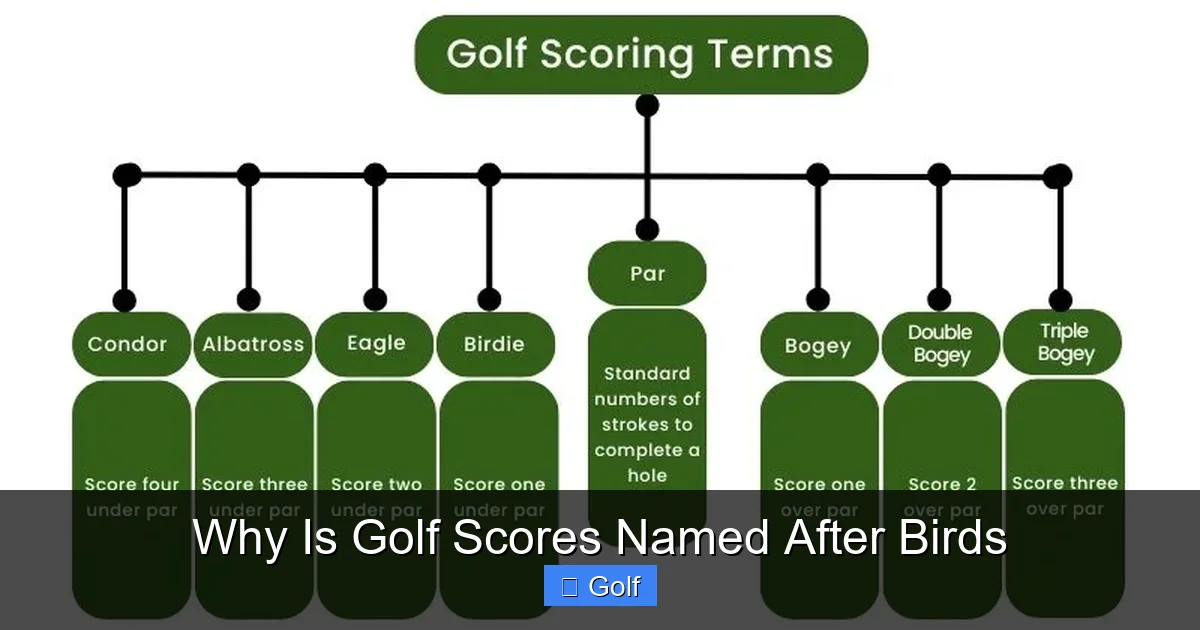
Visual guide about Why Is Golf Scores Named After Birds
Image source: cdn.golflux.com
Defining the Birdie
A birdie is the most common “bird” you will hear on a golf course. It simply means you finished the hole in one stroke fewer than the designated par. If a hole is a par-4, you get a birdie by finishing in three strokes. It is the goal of every amateur golfer, and even for the pros, it represents a successful hole.
Moving Up to the Eagle
If a birdie is one under par, an eagle is two under par. Because an eagle is a larger, more majestic bird than a small birdie, it serves as the perfect metaphor for a more impressive feat. To get an eagle on a par-4, you would need to hole out in just two strokes—often involving a long chip-in or a brilliant approach shot. It is rare, it is beautiful, and it feels exactly as big as the bird it is named after.
The Rare Albatross and Condor
As we move into the ultra-rare territory of scoring, the birds get even bigger. An albatross, also known as a double eagle, is three strokes under par. This is a legendary achievement that most golfers will never see in their lifetime. Even rarer is the “condor,” which is four strokes under par. A condor usually requires a hole-in-one on a par-5, a statistical anomaly that is nearly impossible to witness.
Why Birds Won the Language War?
You might wonder why we didn’t name these scores after other things. Why not “super-shots” or “minus-ones”? Language in sports tends to follow the path of least resistance and the greatest cultural impact. “Birdie” sounded friendly, light, and distinctly American. It captured the joy of the game.
Consistency and Clarity
Once the term “birdie” was adopted by golf associations and printed in major newspapers, it became the gold standard. Once a term becomes written in the history books, it rarely changes. The consistency of using bird names provides a mental shorthand for players. When you tell a friend, “I got an eagle today,” they don’t need a math lesson to understand the weight and the difficulty of that accomplishment.
The Evolution of Golf Through 2026
In 2026, technology has changed the way we play golf, but it hasn’t changed the way we talk about it. With the rise of advanced launch monitors and data analytics, we know more about our scores than ever before. Yet, despite all this data, the heart of the game remains the same: the drive to get that birdie.
Practical Tips for Chasing Birds
If you want to add more birds to your scorecard this season, focus on your approach shots. Most birdies aren’t made on the tee box; they are made on the green or within fifty yards of it. Work on your putting accuracy. A birdie is often just a ten-foot putt that finds the bottom of the cup. Keep your nerves calm, line up your shot, and trust the process.
Understanding Par
Remember that you cannot have a bird without a par. Par is the baseline. It represents the number of strokes a scratch golfer should take to complete a hole. By knowing your course, playing within your skill level, and managing your risk, you put yourself in the best position to turn a par attempt into a bird attempt.
The Global Impact of Golf Terminology
Golf started in Scotland, but it was refined in the United States. While the Scots gave us the game, the Americans gave us the vocabulary. As international tournaments began to bridge the gap between continents, American slang traveled across the Atlantic. By the mid-20th century, the term “birdie” was being used by everyone from Tokyo to London.
Cultural Integration
Today, these terms are universally understood. Even in non-English speaking countries, you will often hear the terms “birdie” and “eagle” used during professional broadcasts. It is a testament to the power of the sport to create a shared global language that transcends borders and cultures.
Conclusion: The Timeless Charm of Golf Scores
So, why is golf scores named after birds? It is a delightful mixture of history, slang, and the human desire to categorize excellence. By linking our greatest successes on the course to the soaring, majestic creatures of the sky, we add a layer of poetic beauty to a game that is already full of challenges and rewards.
As you step onto the first tee this year, remember that you are part of a long tradition of “bird hunting.” Whether you manage a simple birdie or chase the elusive albatross, keep the spirit of the game alive. Enjoy the walk, enjoy the company, and keep swinging for those birds!
Frequently Asked Questions
What is the difference between a birdie and an eagle?
A birdie is finishing a hole one stroke under par, while an eagle is finishing two strokes under par. Both are considered excellent scores that put you in a strong position for the rest of your round.
What is a double eagle?
A double eagle is another name for an albatross. It occurs when a golfer completes a hole in three strokes under par, such as a two on a par-5.
Is there a term for finishing one over par?
Yes, finishing one stroke over par is called a “bogey.” While it is not a bird-related term, it is the most common score for many amateur golfers.
Who actually coined the term birdie?
The term is widely attributed to Ab Smith in 1903 during a round at the Atlantic City Country Club. He shouted that his shot was “a bird” after hitting it close to the pin, and the name stuck.
How rare is an albatross?
An albatross is exceptionally rare, significantly more so than a hole-in-one. Most professional golfers will only see a handful, if any, in their entire careers.
Will these terms ever change?
It is highly unlikely, as the terminology is deeply embedded in the history and culture of golf. These names are now standard across all professional and amateur associations worldwide.