What Makes a Golf Cart Street Legal in Florida?
Navigating the rules for operating a golf cart on public roads in Florida can be tricky, but it is entirely possible with the right equipment and knowledge. To be considered street legal, your vehicle must meet specific safety standards, be properly registered, and strictly adhere to local traffic laws.
If you live in the Sunshine State, you know that the golf cart lifestyle is more than just a hobby – it is a way of life. By 2026, we have seen an explosion in the number of residents choosing these nimble vehicles for quick errands, trips to the beach, or community socialization.
However, jumping onto a busy public road requires more than just a charged battery and a smile. Understanding what makes a golf cart street legal in Florida is the difference between a fun afternoon drive and a costly interaction with law enforcement.
Florida law classifies these vehicles in a few different ways, and the rules change depending on whether you are driving a traditional golf cart or a Low-Speed Vehicle (LSV). If you are dreaming of cruising your neighborhood streets, this guide will walk you through the safety specs, the paperwork, and the common pitfalls you need to avoid this year. Let’s make sure your ride is ready for the open road.
Key Takeaways
- Safety Equipment Matters: A street legal golf cart must feature headlights, brake lights, turn signals, mirrors, a windshield, and seatbelts to meet Florida Department of Transportation requirements.
- Speed Limits: You can typically only operate these vehicles on roads where the posted speed limit is 35 mph or less, though local municipalities may set further restrictions.
- Registration Requirements: All street legal golf carts must be registered with the Florida Department of Highway Safety and Motor Vehicles (FLHSMV) and display a valid license plate.
- Licensing Needs: Operators must hold a valid driver’s license, and insurance coverage is mandatory for all street legal golf carts in the state.
- The “Golf Cart” vs. “Lsv” Distinction: Understanding the legal difference between a standard golf cart and a Low-Speed Vehicle (LSV) is crucial for compliance, as LSVs have more flexibility on public roads.
- Local Ordinances Prevail: Always check your specific city or county ordinances, as local rules in places like The Villages or gated communities often differ from general state statutes.
Understanding the Legal Classification
Before you turn the key, you have to know what your vehicle is. In the eyes of the Florida Department of Highway Safety and Motor Vehicles (FLHSMV), there is a significant legal distinction between a “golf cart” and an “LSV.” Knowing this distinction is the first step toward compliance.
The Traditional Golf Cart
A standard golf cart is defined as a motor vehicle designed for sporting or recreational purposes. By default, these are not meant for high-speed traffic. Under Florida statute, their top speed is generally capped at 20 mph. These vehicles are intended for golf courses and specific residential areas where local authorities have officially opened the roads to such traffic.
The Low-Speed Vehicle (LSV)
If you want to go faster and travel on more roads, you are likely looking for an LSV. An LSV is a vehicle with a top speed of 21 to 25 mph. These vehicles are built with higher safety standards and can be titled, registered, and insured just like a standard passenger car. This classification is what truly makes a golf cart street legal in Florida for a wider variety of public roadways.
Mandatory Safety Equipment Requirements
You cannot simply strap a set of headlights onto a standard cart and expect it to pass muster on a 35 mph road. To be considered a street legal golf cart, your vehicle must be equipped with a specific suite of safety features designed to keep you and your passengers protected in traffic.
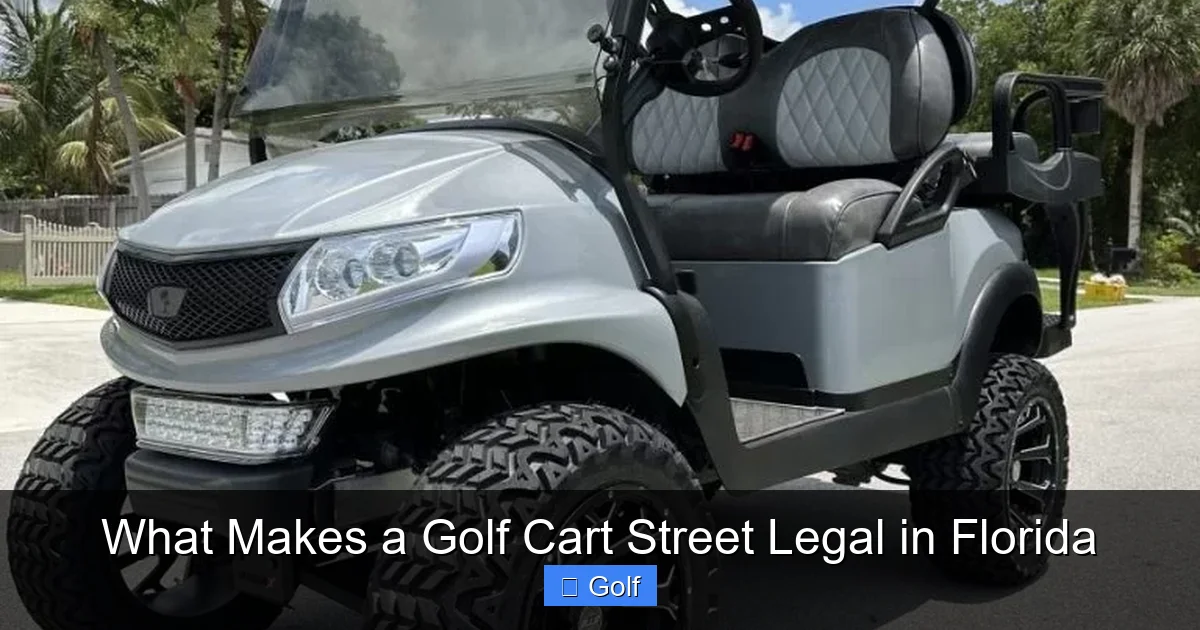
Visual guide about What Makes a Golf Cart Street Legal in Florida
Image source: i0.wp.com
The Essential Hardware List
If you are converting a standard cart into an LSV or purchasing one intended for street use, ensure it has the following components:
- Lighting: You need high-quality headlights, taillights, and turn signals.
- Braking: The braking system must be sufficient for the speed of the vehicle.
- Visibility: External mirrors (one on each side and one rearview) are non-negotiable.
- Structural Integrity: You must have a windshield made of AS1 or AS4 safety glass.
- Restraints: Seatbelts for every passenger are a critical safety and legal requirement.
- Reflectors and Horn: Every street legal vehicle must be visible and audible to other drivers.
- VIN Number: Your vehicle must have a 17-digit Vehicle Identification Number, which is used for title and registration.
Why These Features Matter
These requirements are not just bureaucratic hoops to jump through. They are intended to bridge the gap between a slow-moving cart and the faster vehicles sharing the asphalt. Without these features, you are significantly more vulnerable to accidents. Always test your lighting and horn before every single outing.
Registration, Titling, and Insurance
Once your vehicle is equipped with the right hardware, it is time to handle the administrative side of things. In Florida, if you plan to operate your cart on public roads, you need to treat it like a car when it comes to paperwork. This is perhaps the most important part of what makes a golf cart street legal in Florida.
Getting Your Title and Tag
Because an LSV is considered a motor vehicle, you must obtain a title from the FLHSMV. You will also need to register the vehicle to receive a license plate. Keep your registration document in the glove box at all times. If you are pulled over, an officer will expect to see proof that the vehicle is properly registered.
The Insurance Necessity
Never drive on a public road without insurance. Florida requires all registered motor vehicles to carry Personal Injury Protection (PIP) and Property Damage Liability (PDL) insurance. Many insurance providers offer specialized plans for LSVs and golf carts that are quite affordable. Shop around, but ensure you have the coverage required by law to protect yourself in the event of an incident.
Operating Rules and Road Restrictions
Even if you have the perfect, fully-equipped, and registered vehicle, you still must follow the rules of the road. Florida law is very clear about where and how you can operate these vehicles. Ignoring these rules can result in hefty fines and the revocation of your driving privileges.
The 35 MPH Limit
In general, you are permitted to operate an LSV on roads where the posted speed limit is 35 mph or less. Keep in mind that this is a maximum. If a road is 40 mph, you are legally prohibited from driving your golf cart there, even if you keep to the shoulder. Always check the speed limit signs before turning onto a new street.
License Requirements
Can anyone drive your street legal cart? Only if they have a valid driver’s license. Whether it is a state-issued Class E license or a commercial license, the operator must be legal to drive. This means you cannot let children or unlicensed guests operate the vehicle on public roads, regardless of how safe your neighborhood feels.
Common Mistakes to Avoid in 2026
In 2026, we see more people than ever trying to customize their carts. While personalization is part of the fun, it is easy to accidentally make your vehicle “illegal.” Understanding what makes a golf cart street legal in Florida includes knowing what to avoid.
Don’t Modify the Speed Limiter
One of the most common illegal modifications is bypassing the speed limiter. If your LSV is designed to go 25 mph, do not try to “tune” it to go 30 or 40. Once a vehicle exceeds 25 mph, it moves into a different category of motor vehicle entirely, requiring different safety certifications that your cart likely does not meet. This could lead to your vehicle being impounded.
Ignoring Local Ordinances
Florida state law sets the baseline, but local cities and counties can set stricter rules. For example, some cities prohibit golf carts on specific busy thoroughfares, while others may require specific safety inspections conducted by local law enforcement. Always check the official website of your local city or county clerk to ensure you are compliant with local ordinances as well as state law.
Conclusion
Living the golf cart lifestyle in Florida is one of the best parts of the Sunshine State experience. By understanding exactly what makes a golf cart street legal in Florida, you can enjoy your freedom with total peace of mind. Remember the core pillars: equip your vehicle correctly, register it with the state, keep your insurance current, and always respect the speed limits and local rules.
As we move through 2026, technology is making these vehicles safer and more efficient than ever before. Whether you are headed to the local clubhouse or a quick trip for groceries, keeping your vehicle street legal ensures that you, your family, and your neighbors stay safe. Always err on the side of caution, keep your paperwork organized, and enjoy every mile of the ride.
Frequently Asked Questions
Do I need a special driver’s license to drive a street legal golf cart?
No, you do not need a special class of license. A standard, valid state-issued driver’s license is sufficient to operate a registered and street-legal LSV in Florida.
Can I drive my golf cart on a road with a 45 mph speed limit?
No, you generally cannot drive a golf cart or LSV on any road with a speed limit exceeding 35 mph. You must always adhere to the posted speed limits of the roads you choose to travel.
Is insurance mandatory for all golf carts in Florida?
Insurance is mandatory for all street-legal Low-Speed Vehicles (LSVs) that are registered for use on public roads. It is highly recommended to carry a policy even for neighborhood-only carts to protect against liability.
What is the main difference between a golf cart and an LSV?
A standard golf cart is designed for slower speeds and specific areas, while an LSV is built to higher safety standards, capable of speeds up to 25 mph, and must be titled and registered.
Can I ride my golf cart on the sidewalk?
No, operating a golf cart or LSV on public sidewalks is generally prohibited in Florida. You should remain on the designated roadway or within authorized golf cart lanes.
Do I need to renew my golf cart registration every year?
Yes, just like a standard automobile, your LSV registration must be renewed annually with the Florida Department of Highway Safety and Motor Vehicles.