
Why Does My Golf Cart Backfire? The Role of Fuel in Golf Cart Performance
A backfiring golf cart is usually caused by issues with your fuel system, air intake, or ignition timing. By addressing these common mechanical hiccups early, you can restore your cart’s smooth performance and prevent long-term damage to your engine.
There is nothing quite like the feeling of cruising down the fairway on a crisp morning. You hit the pedal, expecting a smooth, quiet glide toward your ball, but instead, you are met with a loud, startling “pop” that echoes across the course.
If you are asking yourself, “why does my golf cart backfire,” you are certainly not alone. It is one of the most common complaints among golf cart owners, and while it sounds intimidating, it is usually a sign that your cart is just crying out for a little bit of maintenance love.
Backfiring happens when fuel ignites outside of the combustion chamber. When that explosion happens in your muffler or intake instead of inside the cylinder, you get that signature bang. In 2026, with many carts aging and seeing heavy use, understanding these mechanical quirks is key to keeping your ride on the road. Let’s break down the common culprits and get your cart running perfectly again.
Key Takeaways
- Fuel Quality Matters: Stale gas is the most frequent cause of backfiring, as it prevents proper combustion in the engine cylinders.
- Airflow Obstructions: A dirty air filter restricts oxygen, leading to a “rich” fuel mixture that causes unburnt fuel to explode in the exhaust.
- Spark Plug Health: Worn or fouled spark plugs can lead to intermittent misfires, creating the loud popping sound known as a backfire.
- Carburetor Cleanliness: Gunk and debris inside the carburetor can disrupt the air-fuel ratio, forcing the engine to struggle during acceleration.
- Valve Adjustments: If your intake or exhaust valves are improperly timed, they may remain open when they should be closed, causing combustion gases to escape prematurely.
- Safety First: Always disconnect the battery before inspecting internal engine components to avoid accidental starts or electrical shocks.
The Role of Fuel in Golf Cart Performance
The most common answer to “why does my golf cart backfire” usually points back to the fuel. Modern golf carts are sensitive machines, and the quality of what you put in the tank makes a world of difference. If your cart has been sitting in a garage for a few weeks or months, your fuel might have degraded, which is a recipe for backfiring.
The Problem with Stale Gas
Gasoline starts to break down after about 30 days. As it sits, the volatile components evaporate, leaving behind a gummy residue that clogs fuel lines and jets. When you try to start the engine, this poor-quality fuel burns unevenly. This uneven burn means some fuel enters the exhaust system unburnt. When the next cycle happens, that hot exhaust ignites the fuel, causing a loud backfire.
Contamination and Debris
Sometimes, water or dirt gets into your fuel tank. Even a tiny amount of moisture can prevent a clean burn. If you suspect your fuel is old, drain the tank completely and refill it with fresh, high-octane gasoline. Adding a fuel stabilizer if you plan on storing the cart for an extended period is a great preventative measure to ensure you don’t face this issue in the future.
Checking Your Air Intake and Filtration
An engine is basically a giant air pump. To create power, your golf cart needs a precise mix of fuel and oxygen. If the air side of this equation is blocked or restricted, the engine will run “rich,” meaning there is too much fuel and not enough air. This excess fuel has nowhere to go but out the exhaust pipe.
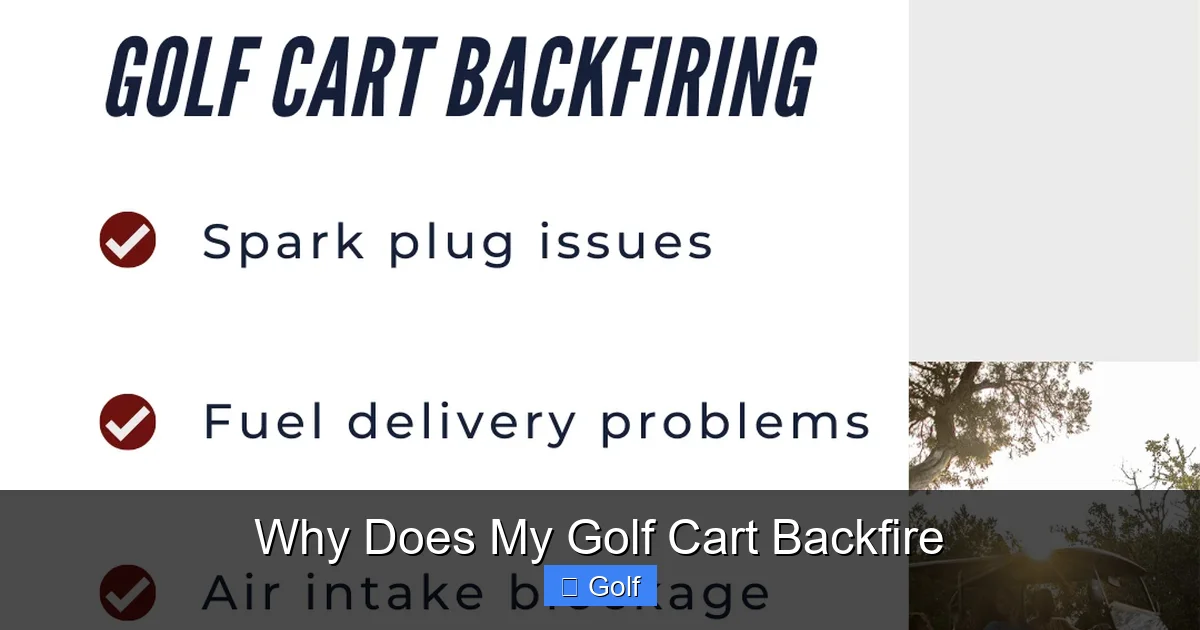
Visual guide about Why Does My Golf Cart Backfire
Image source: gowithgarretts.com
The Importance of a Clean Air Filter
Think of the air filter as your engine’s lungs. Over time, dust from the golf course, pollen, and debris clog the filter. A choked engine cannot breathe, which forces it to draw in fuel differently than designed. Check your air filter every month. If it looks grey or is covered in dirt, simply replace it. It is an inexpensive fix that often solves the “why does my golf cart backfire” mystery immediately.
Air Leaks in the Intake Manifold
On the flip side, too much air can also be an issue. If there is a crack in the rubber boot or a loose gasket between the carburetor and the engine, extra air might be leaking into the system. This creates a “lean” condition. When the mixture is too thin, it can cause the engine to stumble and pop as it tries to compensate for the inconsistent oxygen levels.
The Ignition System and Spark Plugs
If your fuel and air are perfect, the next place to look is the electrical spark. A well-timed, hot spark is necessary to ignite the fuel at exactly the right moment. If the timing is off, or if the spark plug is fouled, you will end up with intermittent combustion that manifests as a backfire.
Inspecting Your Spark Plug
The spark plug is the heart of your engine’s ignition. If the tip of the plug is covered in carbon buildup or oily residue, it might be firing weakly. You can pull the plug out and inspect the color of the electrode. A healthy plug should be tan or light grey. If it is black or wet, replace it. It is a simple two-minute job that can restore smooth power to your cart.
Ignition Timing Issues
Timing is everything. The spark needs to hit the fuel mixture at the exact top of the piston’s stroke. If your ignition timing has slipped perhaps due to a loose flywheel key or a faulty ignition coil the spark might occur while the exhaust valve is still open. This forces the fire out into the exhaust system, creating that classic backfiring sound.
Troubleshooting the Carburetor
The carburetor is the brain of your fuel delivery system. It mixes air and fuel in the correct proportions before sending them into the engine. Because it is a delicate component with tiny passages, it is highly susceptible to clogging, which is why owners often ask “why does my golf cart backfire” when their carburetor gets dirty.
Cleaning the Jets
Small brass jets inside the carburetor control the flow of fuel. If even a microscopic piece of dirt blocks these jets, the fuel-to-air ratio will be skewed. You can use a specialized carburetor cleaner spray to clear out these passages. Many owners find that a quick spray down and a check of the float level solves the problem without needing to replace the entire unit.
Adjusting the Mixture Screw
Most carburetors have a small screw that allows you to fine-tune the fuel mixture. If the engine is popping on deceleration, it might be running too lean. Turning the mixture screw slightly rich (usually counter-clockwise) can often smooth out the combustion cycle. Always make small adjustments, testing the cart after every quarter turn to see if the popping stops.
Valve Train and Internal Engine Health
If you have checked the fuel, air, and spark and the cart is still backfiring, the issue might be deeper inside the engine. The valves act as gates, opening to let air in and closing to trap the explosion. If these valves are not opening or closing at the right time, you will definitely experience backfires.
Adjusting Valve Clearance
Over time, the metal in your engine can wear down slightly, causing the valve clearance to drift. If a valve is too tight, it may not close fully when the engine heats up. If it stays slightly open, the expanding gases from the combustion chamber will leak out into the exhaust before the piston has finished its stroke. Checking and adjusting your valves with a feeler gauge is a common maintenance task that keeps your engine running like new.
Checking for Valve Damage
In rare cases, a valve might be bent or burnt. This is more serious and usually requires a bit more mechanical knowledge to fix. If you hear a loud, metallic clanking alongside the backfiring, it is best to consult a professional mechanic to avoid causing permanent damage to the piston or cylinder wall.
Practical Tips for Long-Term Reliability
The best way to stop asking “why does my golf cart backfire” is to prevent it from happening in the first place. Consistency is key when it comes to small engines. If you follow a regular maintenance schedule, you will find that these annoying pops become a thing of the past.
Routine Maintenance Schedule
- Every 50 hours: Change the oil and inspect the air filter.
- Every 100 hours: Replace the spark plug and check fuel lines for cracks.
- Seasonal: Drain the carburetor bowl and use fresh gas if you are storing the cart for the winter.
By keeping a simple logbook or using a reminder app on your phone, you can track when your last tune-up occurred. Remember, your golf cart works hard to move you around the course; giving it a little attention keeps it reliable for years to come.
Conclusion
A backfiring golf cart can be frustrating, but it is rarely a sign that your vehicle is headed for the scrap heap. In 2026, parts are more accessible than ever, and the mechanical principles of these engines remain straightforward. By systematically checking your fuel quality, air filter, spark plug, and carburetor, you can narrow down the culprit quickly.
Most of the time, the solution is as simple as fresh gas or a new spark plug. Don’t be afraid to get under the seat and do a little investigation. With a bit of patience and the right tools, you will be back to enjoying a quiet, smooth ride on the golf course in no time. If you ever feel out of your depth, don’t hesitate to reach out to a local mechanic who can help keep your cart in top-tier condition.
Frequently Asked Questions
Is it dangerous to drive a golf cart that backfires?
While it is usually not an immediate safety hazard, you should address the issue as soon as possible. Driving with a backfiring engine can cause long-term damage to your exhaust system, muffler, and internal engine components.
Can I fix a backfiring golf cart myself?
Yes, most causes of backfiring such as a dirty air filter or a bad spark plug are simple tasks that most owners can handle. You do not need professional mechanical skills to perform basic engine maintenance on a standard golf cart.
What does it mean if my cart backfires only when I let off the gas?
This is often a sign of a “lean” fuel condition or an exhaust leak. When you decelerate, the engine creates a high-vacuum state that can pull extra air into the exhaust, igniting any remaining fuel and causing a pop.
How often should I change my golf cart’s spark plug?
For the average user, replacing the spark plug once every year or every 100 operating hours is a good rule of thumb. If you use your cart daily, you might want to check it for carbon buildup every six months.
Does high-altitude driving affect backfiring?
Yes, at higher altitudes, the air is thinner, which changes your air-fuel ratio. If your golf cart is tuned for sea level but you are driving in the mountains, the engine may run rich and cause backfiring.
Should I use fuel additives to stop backfiring?
Fuel additives like cleaners can help remove minor deposits from your carburetor jets. While they are a great maintenance tool, they will not fix major mechanical issues like bad valve timing or a damaged spark plug.