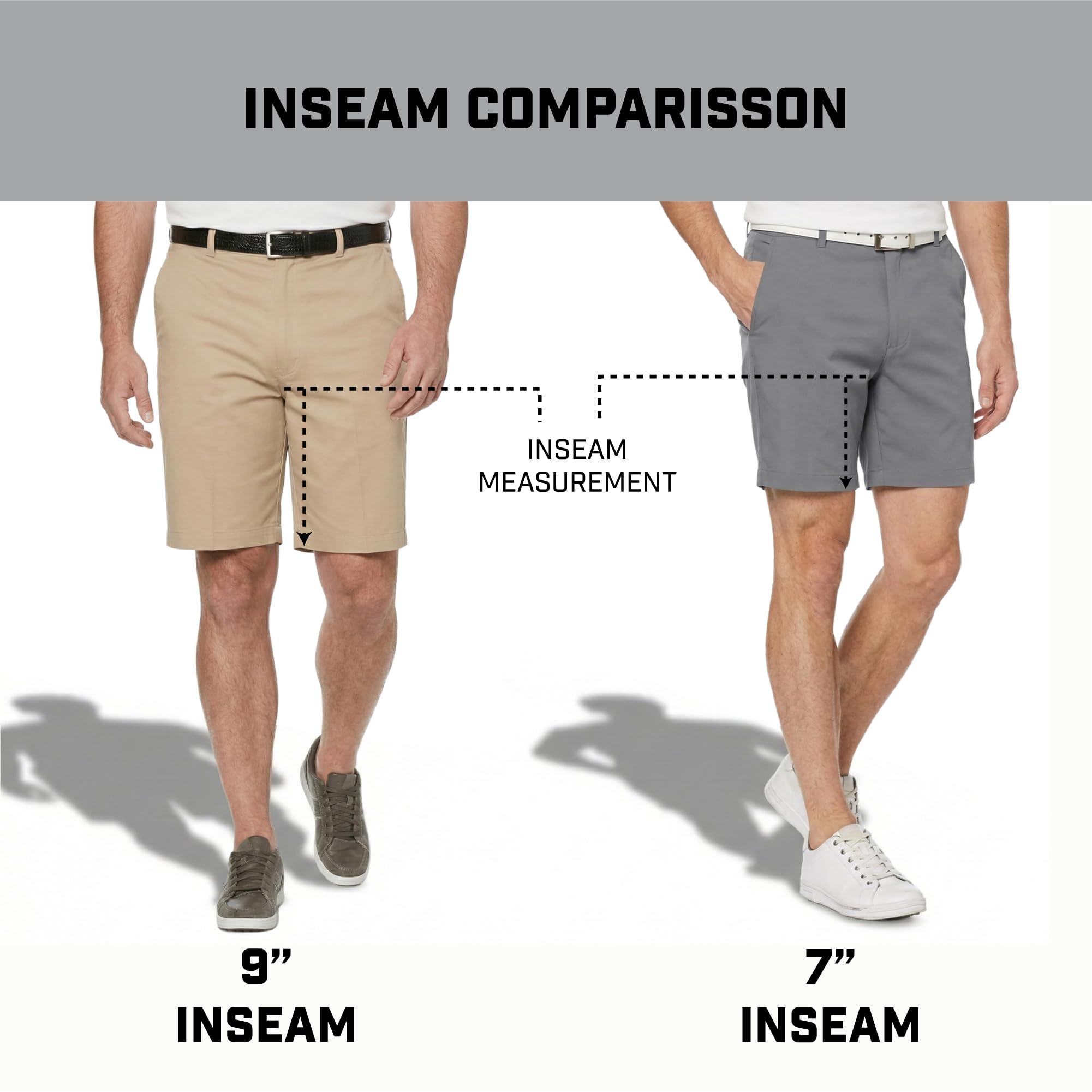
Golf Shorts Vs Regular Shorts: Key Differences Explained
Introduction
For golfers in the United States, the main difference between golf shorts and regular shorts is purpose. Golf shorts are made for movement, comfort, and course dress codes. Regular shorts are made for casual wear and may not have the stretch, pockets, fabric, or clean look that golf often requires.
Golf shorts are usually the better choice for playing golf. Yet regular shorts can work for casual rounds if they allow a full range of motion and meet the rules of the course or club. The right choice depends on fit, fabric, weather, pockets, comfort, and the golf facility’s dress policy.

Golf Shorts vs Regular Shorts: Quick Comparison
Golf shorts are a type of performance short. Regular shorts are a broad category that includes casual, athletic, cargo, denim, and swim shorts.
| Feature | Golf shorts | Regular shorts |
|---|---|---|
| Main use | Golf and smart-casual wear | Daily wear, exercise, travel, or leisure |
| Fabric | Often stretch woven fabric with moisture control | Varies widely by type |
| Range of motion | Made for walking, bending, and swinging | May be limited, depending on the cut |
| Waist | Often shaped for a belt and stable fit | May use an elastic waist or drawstring |
| Pockets | Usually deep enough for tees, balls, and a glove | Pocket size and placement vary |
| Appearance | Clean and course-ready | Can look casual or sporty |
| Dress-code fit | Often accepted at private and public courses | Depends on the course |
| Cost | Often higher | Available at many price points |
| Best use | Golf, travel, business-casual settings | General daily use |
The short answer: Choose golf shorts for regular play, warm weather, and courses with dress rules. Choose regular shorts only when they provide enough movement and the course allows them.
What Are Golf Shorts?
Golf shorts are shorts designed for the physical and social demands of golf. They usually combine a neat appearance with features that help during a round.
Most golf shorts use a woven fabric with some stretch. This helps the shorts move with the hips and legs during the golf swing. Many pairs also dry faster than cotton shorts, which can help in hot or humid weather.
Common golf short features include:
- A flat front or clean five-pocket design
- Belt loops
- A secure button, hook, or zip closure
- Stretch in the fabric
- Deep front pockets
- A rear pocket for a glove, scorecard, or small items
- A length that stays modest when sitting or bending
- A simple style that works with a polo shirt
Golf shorts do not have to come from a golf brand. A pair of lightweight stretch chino shorts may perform much like golf shorts if the fit, fabric, and design are suitable.
What Are Regular Shorts?
Regular shorts are any shorts not made specifically for golf. This group includes athletic shorts, cargo shorts, denim shorts, board shorts, running shorts, and casual chino shorts.
Some regular shorts work well on a golf course. Stretch chino shorts are one example. They may have a clean look, useful pockets, and enough comfort for a full round.
Other regular shorts may cause problems. Denim can feel stiff. Running shorts may have shallow pockets. Cargo shorts can feel bulky when carrying a golf glove, tees, and a ball marker. Swim shorts may lack the structure and appearance expected at many courses.
The label matters less than the actual design.
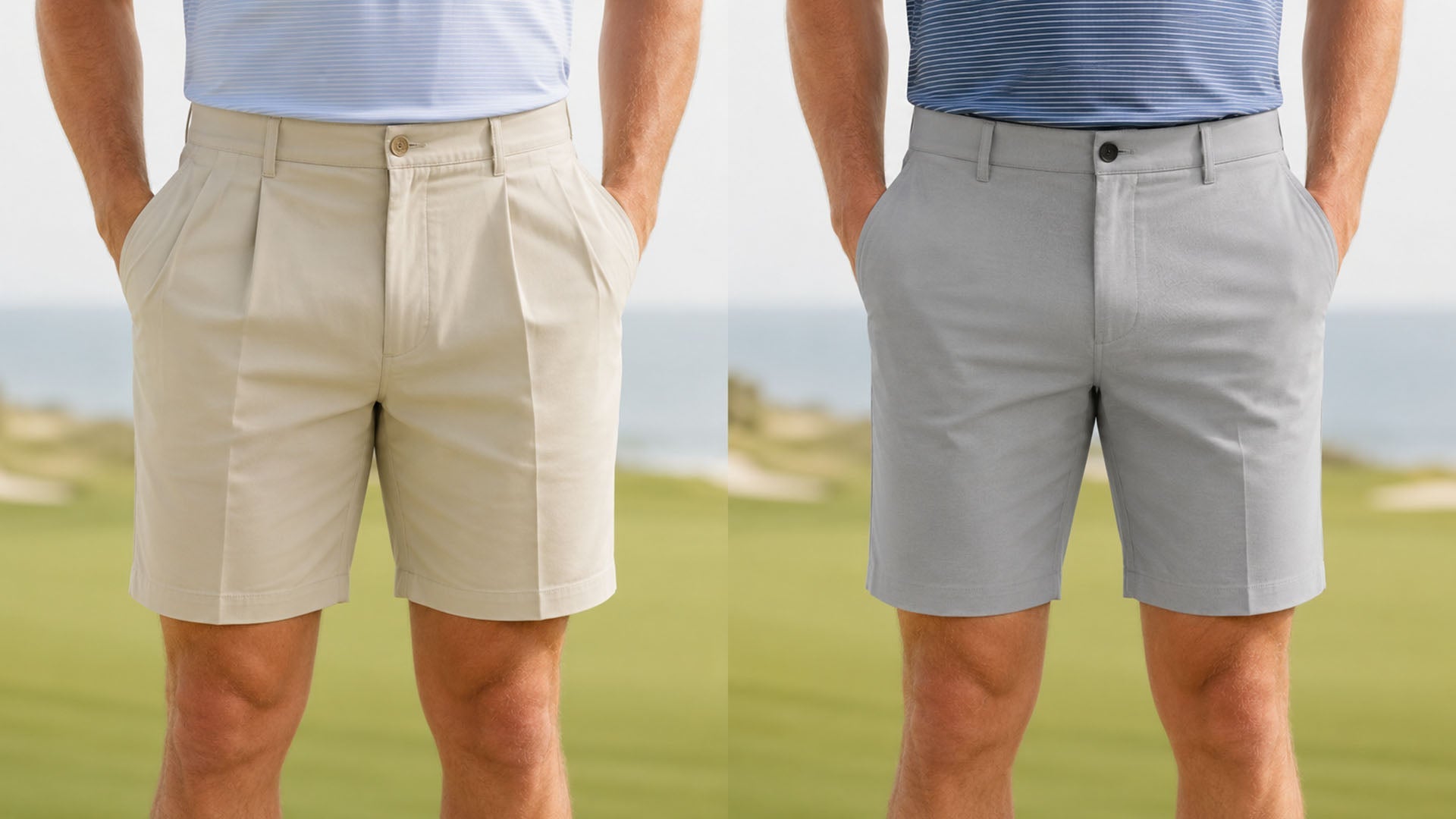
The Main Differences Between Golf Shorts and Regular Shorts
The most useful differences involve movement, fabric, fit, storage, and appearance.
1. Golf Shorts Offer Better Swing Mobility
A golf swing requires movement in the hips, knees, and upper legs. Golf shorts often include stretch fibers and a cut that allows the golfer to rotate without pulling at the waist or thighs.
This does not mean regular shorts prevent a good swing. It means the wrong pair may feel tight during setup, the backswing, or the finish.
To test mobility before a round:
- Put on the shorts with the belt you plan to wear.
- Bend into a golf posture.
- Turn your hips from side to side.
- Squat slightly.
- Take several slow practice swings.
The waistband should stay in place. The fabric should not pull across the thighs or seat. The pockets should not dig into your body.
2. Golf Shorts Often Handle Heat and Sweat Better
Many golf shorts use synthetic fibers or blended fabrics. These fabrics may move sweat away from the skin and dry faster than heavy cotton.
Cotton can still be comfortable in mild weather. It may feel soft and natural. However, cotton often holds moisture longer after sweating or light rain.
Fabric performance depends on the actual garment. A pair of lightweight regular shorts may feel cooler than thick golf shorts. Check the fabric weight, lining, ventilation, and care label instead of relying only on the product name.
3. Golf Shorts Usually Have a More Stable Waist
Golf shorts are often made to work with a belt. This helps keep the shorts secure during walking, bending, and swinging.
A drawstring or elastic waist is not automatically wrong. It may be useful for comfort. But some private clubs, resorts, and organized events may expect belt loops and a more traditional appearance.
The best waist is one that stays secure without feeling tight. A belt should not be used to hold up shorts that are too large.
4. Golf Shorts Provide Useful Storage Without Excess Bulk
Golfers often carry tees, a ball marker, a glove, a scorecard, and sometimes a phone. Golf shorts commonly include pockets shaped for these items.
Pocket design matters more than the number of pockets. Deep pockets can keep a phone or ball from falling out. A rear pocket may hold a glove or scorecard. A small pocket can hold tees or a ball marker.
Large cargo pockets can add bulk. That bulk may press against a golf bag or feel awkward while sitting in a cart. On many courses, a simple front-and-back pocket layout is more practical.
5. Golf Shorts Usually Look More Course Appropriate
Many US golf courses ask players to wear neat shorts, collared shirts, and appropriate shoes. The exact policy varies by course, club, event, and time of day.
Golf shorts often meet these expectations because they resemble tailored chino shorts. Regular athletic shorts, cutoffs, denim shorts, and swim shorts may not.
The United States Golf Association does not set one universal shorts style for every public course. The facility or event may set its own dress policy. A private club can be stricter than a municipal course.

Are Golf Shorts Required on a Golf Course?
Golf shorts are not universally required in the United States. The course, club, resort, tournament, or event sets the clothing policy.
Before playing, check the course website or call the shop. Look for terms such as:
- Golf attire
- Proper golf clothing
- Dress code
- Country club attire
- Collared shirt required
- No denim
- No athletic shorts
- Bermuda-length shorts
- Soft spikes required
A course may allow shorts but reject certain styles. For example, it may allow tailored shorts but not gym shorts, cutoffs, or cargo shorts.
When the policy is unclear, choose conservative clothing:
- Tailored golf shorts
- A collared polo shirt
- A belt
- Golf shoes or clean athletic shoes, if allowed
- A hat with the brim facing forward
A quick call is better than arriving in clothing that may keep you from playing.
Are Regular Shorts Good Enough for Golf?
Regular shorts can be good enough for golf when they meet three tests:
- They allow free movement.
- They stay comfortable for several hours.
- They meet the course dress code.
Stretch chino shorts are often a strong alternative to golf shorts. Lightweight athletic shorts may work at a casual public course if the course permits them. Denim, very short shorts, and heavy cargo shorts are less reliable choices.
Use this decision guide:
| Regular short type | Likely golf suitability | Main concern |
|---|---|---|
| Stretch chino shorts | High | Confirm length and course policy |
| Lightweight athletic shorts | Medium | May look too casual |
| Running shorts | Low to medium | Short length and shallow pockets |
| Cargo shorts | Medium | Bulk and a casual appearance |
| Denim shorts | Low | Stiff fabric and possible dress-code issue |
| Swim shorts | Low | Loose fit and poor course appearance |
| Compression or gym shorts | Low | Often too casual for golf |
The course policy controls the final answer. Performance alone does not make clothing acceptable.
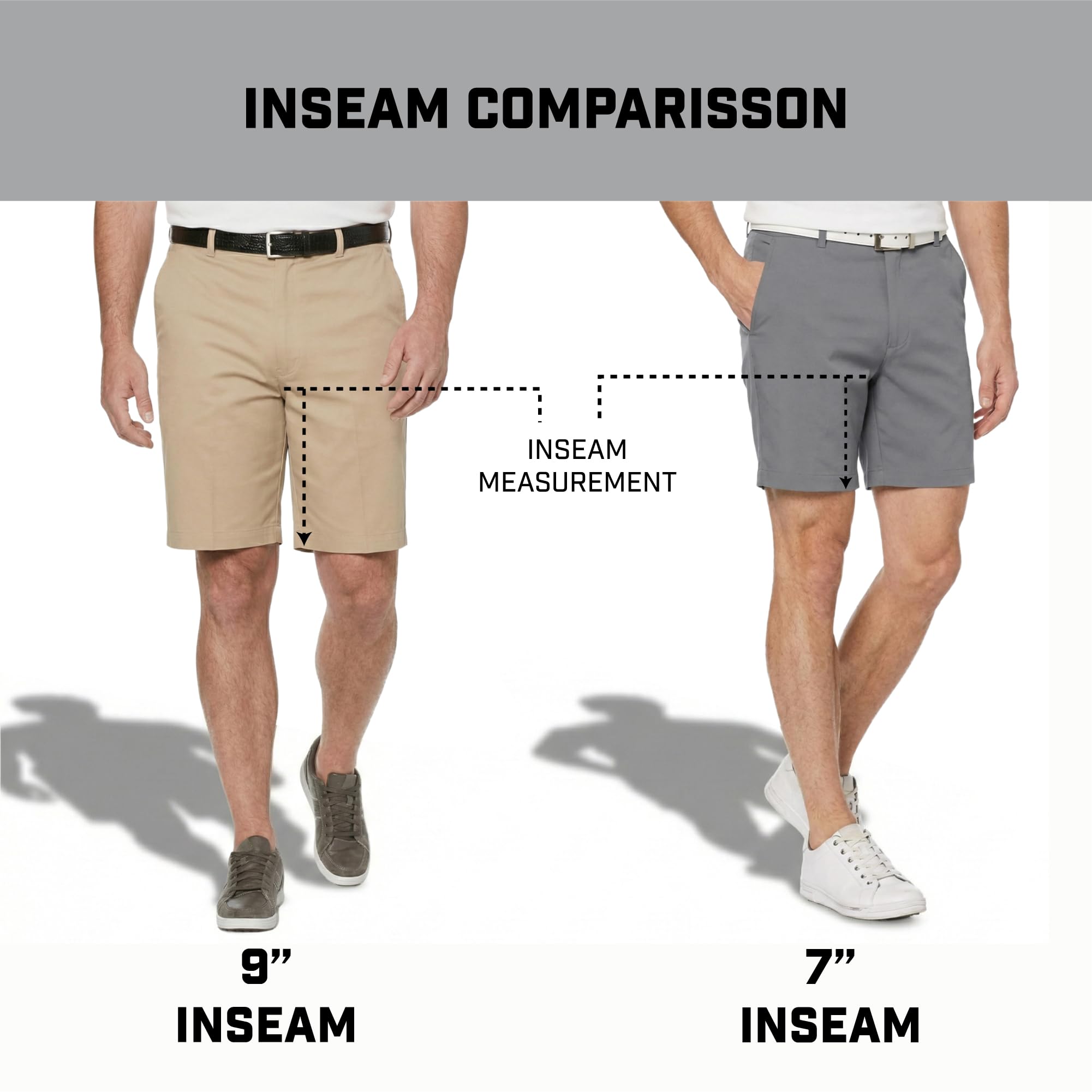
How Should Golf Shorts Fit?
Golf shorts should fit close to the body without squeezing it. A good fit supports movement and keeps the garment in place.
Check these areas:
Waist
The waistband should sit securely without pinching. You should not need to tighten the belt to the last hole.
Seat and Hips
The fabric should lie smoothly across the seat and hips. Excess fabric can catch on a golf bag. A very tight fit can restrict rotation.
Thighs
You should be able to bend and rotate without pulling across the thighs. If the leg opening feels tight in a golf stance, try a roomier cut.
Length
There is no single USGA-required shorts length for all golf. Many courses prefer a modest, tailored length. The shorts should remain comfortable when you sit in a cart and bend to pick up a ball.
Very short athletic shorts may fail a club’s dress code. Very long shorts may feel warm or bulky. Aim for a length that gives coverage without restricting the knees.
Pockets
Place a ball, tees, and your phone in the pockets before testing the fit. A pair that feels fine when empty may pull or sag when loaded.

Which Fabric Is Best for Golf Shorts?
A lightweight stretch woven fabric is often the most practical choice for golf. Polyester blends, nylon blends, and fabrics with a small amount of elastane can provide comfort and movement.
Each fabric has trade-offs:
| Fabric | Benefits | Limits |
|---|---|---|
| Polyester blend | Light, quick drying, often wrinkle resistant | May hold odor if not washed well |
| Nylon blend | Strong, smooth, and light | Can feel less soft than cotton |
| Cotton | Soft and breathable in mild weather | Holds moisture and may wrinkle |
| Cotton stretch blend | Comfortable with better movement | May dry more slowly than synthetic fabric |
| Linen blend | Cool and breathable | Can wrinkle and may have less stretch |
| Denim | Durable and casual | Heavy, stiff, and often unsuitable for golf |
A small amount of stretch can improve comfort. More stretch is not always better. Very soft fabric may lose shape or feel less stable in the pockets.
For hot US summers, look for light fabric, a comfortable waistband, and a finish that does not trap heat. For cool mornings, slightly heavier fabric may feel better.

What Should You Wear With Golf Shorts?
Golf shorts work best with a simple, neat outfit. A collared polo shirt is the safest choice for most US courses.
A practical warm-weather golf outfit includes:
- Tailored golf shorts
- A tucked or untucked polo, based on the course policy
- A belt that matches the shoes or outfit
- Golf shoes or approved athletic shoes
- A cap or visor
- A lightweight rain layer when needed
Avoid assuming that a high price makes an outfit acceptable. A low-cost pair of clean, well-fitting shorts may meet the policy better than expensive shorts with a very casual design.
For private clubs, follow the club’s exact rules. Some clubs may require a tucked shirt, prohibit certain colors, or limit shorts to a stated length. Policies can also vary between the golf course, dining room, practice area, and clubhouse.
Golf Shorts for Different Playing Conditions
The best shorts can change with the weather and the type of round.
Hot and Humid Weather
Choose light, breathable fabric with some stretch. A fast-drying material can feel more comfortable if you sweat heavily.
Avoid thick cotton or lined shorts that hold heat. Also check whether the pockets become heavy or sag when damp.
Dry Heat
Loose, lightweight shorts can work well. Breathability may matter more than moisture management. A longer cut can also provide more sun coverage.
Light Rain
Synthetic fabric may dry faster than cotton. However, shorts provide little protection from rain. If conditions are wet, use rain pants designed for golf instead of expecting shorts to keep you dry.
Walking Rounds
For walking, focus on a secure waist, low weight, and pockets that do not bounce. A phone or rangefinder can make loose pockets uncomfortable.
Cart Rounds
A slightly more structured pair may work well. Test how the shorts feel while sitting. A rear pocket can press against the body or cart seat if it has a bulky object inside.
Practice Sessions
Practice ranges may have more relaxed clothing rules than a private course. You still need free movement and comfort. Regular athletic shorts may be suitable if the facility permits them.
How Much Do Golf Shorts Cost Compared With Regular Shorts?
Golf shorts can cost more because they often use stretch fabric, technical finishes, reinforced seams, and course-focused design. However, price does not prove better performance.
Compare shorts by value rather than the label:
- Does the fabric allow movement?
- Is the waistband comfortable?
- Do the pockets hold your gear?
- Will the shorts work with the course dress code?
- Can they be washed easily?
- Do they dry at a reasonable speed?
- Will you wear them outside the golf course?
A regular pair of stretch chino shorts may provide enough value for an occasional golfer. A frequent golfer may benefit from owning two or three pairs that handle repeated washing and long rounds.
Do not buy several pairs before testing one. Wear the pair for a full practice session or round, then check comfort, pocket use, drying time, and fit after washing.
Common Mistakes When Choosing Shorts for Golf
Choosing Style Over Movement
A pair may look sharp but restrict the hips or thighs. Test the shorts in a golf stance before wearing them for a round.
Ignoring the Course Dress Code
A course may allow shorts but prohibit athletic shorts, cargo shorts, denim, or short inseams. Check the local policy first.
Wearing Shorts That Are Too Loose
Loose shorts can slide during the swing. A belt may help, but it cannot fix a poor size.
Wearing Shorts That Are Too Tight
Tight shorts can restrict hip rotation and make long walks uncomfortable. They may also pull at the seams when you squat.
Filling Every Pocket
Heavy pockets can change how the shorts sit. Carry only what you need, or use a golf bag, pushcart, or small golf pouch.
Forgetting the Belt
Some golf shorts are designed to sit correctly with a belt. A belt can also help create a more polished look at a club.
Assuming Moisture-Wicking Means Waterproof
Moisture-wicking fabric can move sweat away from the skin. It does not make shorts waterproof or fully rainproof.
Ignoring Care Instructions
Heat can damage stretch fibers or change the fit. Follow the garment label, especially for washing and drying.
Golf Shorts vs Regular Shorts: Decision Guide
Use golf shorts when:
- You play at a private club or resort.
- The course has a formal dress code.
- You walk or play often.
- You need secure pockets.
- You play in hot or humid weather.
- You want one pair for golf and smart-casual use.
- Your regular shorts restrict your swing.
Regular shorts may be enough when:
- The course clearly allows them.
- They have a clean, tailored appearance.
- They provide enough room to bend and rotate.
- The pockets hold your basic items.
- You play a casual round or practice session.
- You already own a comfortable stretch chino pair.
Do not use regular shorts when:
- The facility bans their style.
- They are stiff or too tight.
- They slide down during the swing.
- They have large, heavy pockets.
- They are damaged, stained, or unsuitable for the setting.
The best choice is not always the shorts marketed as “golf.” It is the pair that fits well, moves well, stores what you need, and follows the course policy.
Key Takeaways
- Golf shorts are designed for movement, comfort, storage, and a neat course appearance.
- Regular shorts can work if they fit well and meet the facility’s dress code.
- Stretch chino shorts are often the best regular-short alternative.
- Denim, swim, gym, and very short athletic shorts are less reliable for golf.
- No single shorts style is required at every US golf course.
- Always check the course or club policy before your round.
- Test the waistband, thigh room, length, and pockets in a golf stance.
FAQs
Can I wear regular shorts to play golf?
Yes, if the shorts allow free movement and meet the golf course’s dress code. Tailored stretch chino shorts are usually a safer choice than denim, swim, or gym shorts.
Are golf shorts more comfortable than regular shorts?
They can be, especially when they use stretch fabric, a stable waistband, and useful pockets. Comfort still depends on fit, fabric, weather, and personal preference.
Do golf shorts have to be a certain length?
There is no one universal length for every US course. A club or event may set its own standard. Choose a modest, tailored length and check the local policy.
Can I wear cargo shorts on a golf course?
Some courses allow cargo shorts, but others do not. Cargo pockets may also feel bulky while walking, sitting in a cart, or carrying a golf bag.
Are khaki shorts the same as golf shorts?
Not always. Khaki describes a color or fabric style, while golf shorts describe a garment’s intended use and features. Khaki shorts can work for golf when they provide enough stretch, comfort, and course-appropriate coverage.
What are the best shorts for beginner golfers?
A beginner should start with clean, comfortable stretch shorts that meet the course policy. There is no need to buy premium golf clothing before learning what fit and pocket layout work best.
Can women wear regular shorts for golf?
Yes. The same basic rules apply: the shorts should allow movement, provide comfort, and meet the course or club policy. Women’s golf shorts may also include a higher waist, different pocket placement, or a cut designed for a different hip-to-waist shape.
Conclusion
Golf shorts are usually the safer and more useful choice for playing golf because they combine movement, comfort, storage, and a course-ready look. Regular shorts can work well when they are tailored, flexible, comfortable, and allowed by the facility.
Before your next round, check the dress code and test your shorts in a golf stance. If you can bend, rotate, walk, and carry your basic gear without pulling or slipping, the shorts are likely suitable.