Whats the Difference Between Tennis Elbow and Golf Elbow?
Tennis elbow and golf elbow are both common overuse injuries, but they affect opposite sides of your arm. Tennis elbow causes pain on the outer elbow, while golf elbow focuses on the inner elbow. Understanding these key differences is the first step toward getting back on the course or the court pain-free.
If you are reading this, chances are you are nursing a sore elbow. Maybe you felt a sharp twinge during your last drive at the club, or perhaps that nagging ache showed up after a long day of typing at your desk. You might be wondering: what is the difference between tennis elbow and golf elbow?
It is a question I hear all the time in 2026. While both conditions involve inflammation and pain in the tendons around the elbow joint, the underlying anatomy and the way they affect your daily life are quite different.
Think of these two injuries as mirror images of each other. They both stem from repetitive motion, which causes tiny tears in the tendons that attach your forearm muscles to the bones in your elbow. If you ignore the signs, that small ache can turn into a chronic issue that makes even holding a coffee mug difficult. Let’s break down everything you need to know to identify your pain and get moving again.
Key Takeaways
- Location Matters: Tennis elbow (lateral epicondylitis) impacts the outside of the elbow, whereas golf elbow (medial epicondylitis) impacts the inside.
- Activity Specifics: Despite the names, these injuries often happen during daily office tasks, gardening, or repetitive lifting, not just while playing sports.
- Mechanism of Injury: Tennis elbow is usually caused by repetitive extension of the wrist, while golf elbow is linked to repetitive wrist flexion.
- Rest is Essential: Both conditions are forms of tendonitis that require immediate activity modification to prevent long-term tissue damage.
- Physical Therapy Works: Targeted eccentric strengthening exercises are considered the gold standard for long-term recovery in 2026.
- When to see a Pro: If home care doesn’t show progress within two weeks, professional diagnostic imaging is necessary to rule out nerve entrapment.
Anatomy of the Pain: Understanding the Difference
The Lateral View (Tennis Elbow)
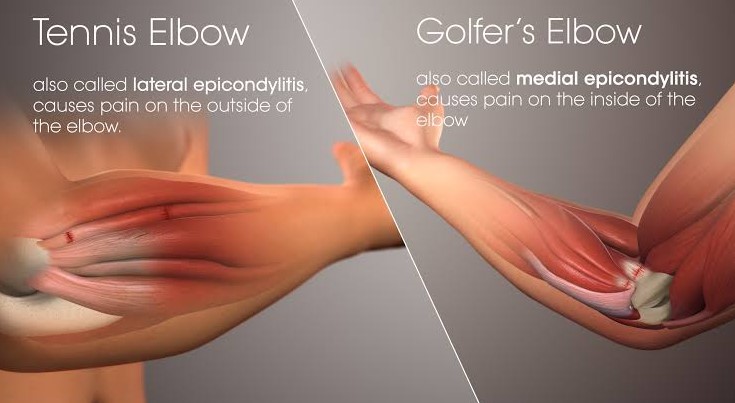
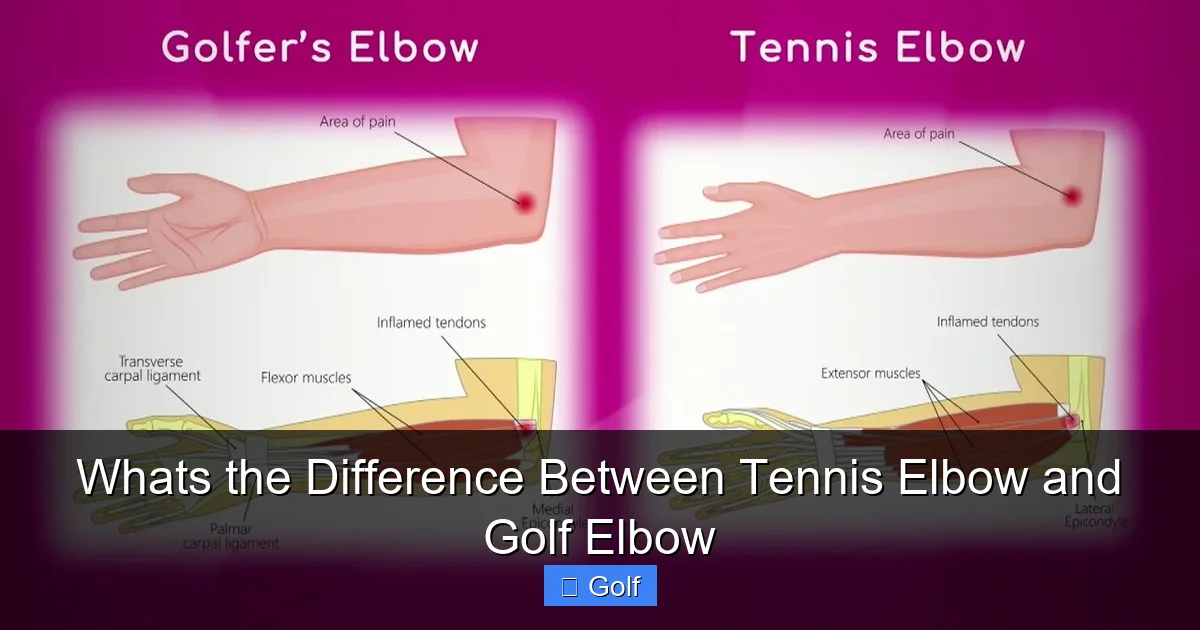
Tennis elbow, or lateral epicondylitis, is the more common of the two. It specifically affects the tendons on the outside of your elbow. The muscles responsible for extending your wrist the ones that pull your hand back toward your forearm attach to a bony bump on the outer elbow called the lateral epicondyle. When you repeat these motions, like swinging a racquet or using a screwdriver, you create microscopic tears in the tendon.
By 2026, we see this injury just as much in office workers as we do in athletes. If you spend your day using a mouse or typing at an awkward angle, you are placing constant strain on these extensor muscles. The pain usually starts as a dull ache and can radiate down into your forearm, making it hard to grip objects firmly.
The Medial View (Golf Elbow)
Golf elbow, or medial epicondylitis, is located on the inside of the elbow. This is where the muscles that flex your wrist and rotate your forearm attach to the bone. When you strike a golf ball, especially if you hit the ground, you can put a massive amount of stress on these flexor tendons. That sudden impact or repetitive whipping motion causes the inflammation we associate with this condition.
Just like its counterpart, golf elbow isn’t limited to the links. Anyone who performs repetitive pulling motions or heavy lifting can develop this. If you feel pain when you bend your wrist toward your palm or when you rotate your forearm inward, you are likely dealing with medial-side irritation.
How to Self-Diagnose Your Elbow Pain
Testing for Tennis Elbow
You can perform a quick test at home to see if your pain is lateral. Sit at a table and place your forearm flat on the surface with your palm facing down. Try to lift your hand up against the resistance of your other hand. If you feel a sharp, stabbing sensation on the bony bump on the outside of your elbow, that is a classic sign of tennis elbow. The pain is usually most intense during the “extension” phase of the movement.
Visual guide about Whats the Difference Between Tennis Elbow and Golf Elbow
Image source: i.ytimg.com
Testing for Golf Elbow
For the golf elbow test, again place your forearm on a table, but this time have your palm facing up. Try to lift your fingers or hand toward your body against resistance. If you feel pain on the inner bump of your elbow, you are likely dealing with golf elbow. This test engages the flexor muscles that are stressed when you swing a club or perform a pulling motion in the gym.
The Role of Activity Modification
Stopping the Cycle of Damage
The most important step in 2026 for treating either condition is to stop doing the thing that hurts. I know it is hard to put the clubs away or stop training, but tendonitis is an injury of accumulation. If you keep irritating the tissue, it will never have a chance to heal. Think of your tendon like a rope; if you keep fraying the fibers, the rope will eventually snap. You need to give those fibers a break to knit themselves back together.
Adjusting Your Technique
If you are a golfer, look at your swing mechanics. Are you hitting “fat” shots where you strike the turf before the ball? That vibration travels straight up the shaft and into your elbow. If you play tennis, check your grip size. A grip that is too small can force you to squeeze too hard, which translates to extra stress on your elbow tendons. Small equipment tweaks often yield huge results in pain reduction.
Treatment Strategies for 2026
R.I.C.E. and Beyond
We all know the Rest, Ice, Compression, and Elevation mantra. While it works for the initial inflammatory phase, it isn’t the whole solution. In the first 48 hours, ice is your best friend to calm the sharp pain. However, after the initial sting fades, you need to transition into active recovery. Over-relying on ice for weeks can actually slow down the natural healing process because it reduces the blood flow needed to repair the tendon.
Eccentric Exercises
By 2026, the gold standard for treating both tennis and golf elbow is eccentric exercise. This means you focus on the “lowering” phase of a movement. For tennis elbow, you use your healthy hand to help lift a light weight into the extension position, then slowly lower the weight using only the injured arm. This puts load on the tendon in a controlled way, which signals the body to strengthen the fibers without further tearing them.
When to See a Specialist
Recognizing the Warning Signs
Sometimes, what feels like elbow tendonitis is actually something else. If you have tingling, numbness, or loss of grip strength, you might be dealing with nerve entrapment. The ulnar nerve runs right near the medial epicondyle the site of golf elbow. If that nerve gets irritated or compressed, you need more than just rest. You need a professional to assess if the pain is muscular or neurological.
Diagnostic Tools
If home rehab does not work after a few weeks, a doctor might suggest an ultrasound or an MRI. These tools allow us to see the quality of the tendon. We are looking for “tendinosis,” which is a degeneration of the tissue that happens when the body stops trying to heal itself. Catching this early is the secret to a quick return to your favorite sports.
Prevention: Staying on the Course Long-Term
Warm-up Routine
Most elbow injuries occur because we jump into intense activity with cold muscles. Spend five minutes doing dynamic stretches before you pick up a club or racquet. Use a resistance band to perform light wrist rotations and forearm stretches. A warm muscle is pliable and can absorb shock much better than a cold, stiff one. Think of it like a rubber band; cold rubber snaps, but warm rubber stretches.
Strength Training
The best way to prevent these injuries in the future is to strengthen the muscles surrounding the elbow. Forearm curls and reverse curls are fantastic additions to your gym routine. By increasing the capacity of the forearm muscles, you make them more resilient to the stresses of your daily life and your golf game.
Remember, your elbow is just a bridge between your shoulder and your hand – if your shoulders are weak, your elbow has to work way harder than it should. In conclusion, while tennis elbow and golf elbow share a similar name and cause, they are distinct issues that require different approaches to healing.
Whether you are dealing with the sharp bite of lateral epicondylitis or the nagging pull of medial epicondylitis, the path to recovery is the same: respect the pain, adjust your movement, and slowly rebuild your strength. Your elbows are vital for your quality of life, so do not rush the process. With the right care and a bit of patience, you will be back to your best performance in no time.
Frequently Asked Questions
Is golf elbow only caused by playing golf?
No, golf elbow is a general term for medial epicondylitis, which can be caused by any activity involving repetitive wrist flexion. Activities like gardening, heavy lifting, or repetitive typing are common causes for people who never pick up a club.
Can I keep playing sports if I have elbow pain?
It is generally recommended to stop the specific activity that triggers the pain until the inflammation subsides. Continuing to play through pain often leads to chronic tissue damage that takes much longer to heal.
Does a brace actually help with elbow pain?
Yes, a counterforce brace can help redistribute the pressure away from the inflamed tendon attachment point. While it is not a cure, it can provide enough temporary relief to allow you to perform daily tasks with less discomfort.
How long does it take for these injuries to heal?
For most mild cases, you can see significant improvement within four to six weeks if you follow a consistent eccentric exercise routine. Chronic or severe cases can take several months to fully resolve depending on the extent of the tissue damage.
Should I use heat or ice for my elbow?
Use ice during the first 48 hours or after an activity that flares up your pain to reduce inflammation. Use heat before you perform your rehabilitation exercises to increase blood flow and make the tendons more pliable.
When should I worry that it is not just tendonitis?
You should see a doctor if you experience numbness, tingling down into your fingers, or an inability to hold onto objects. These are common signs of nerve involvement, which requires a completely different treatment plan than standard tendonitis.